How Much Money Can I Get for Scrapping My Car? Real Prices & Expert Guide
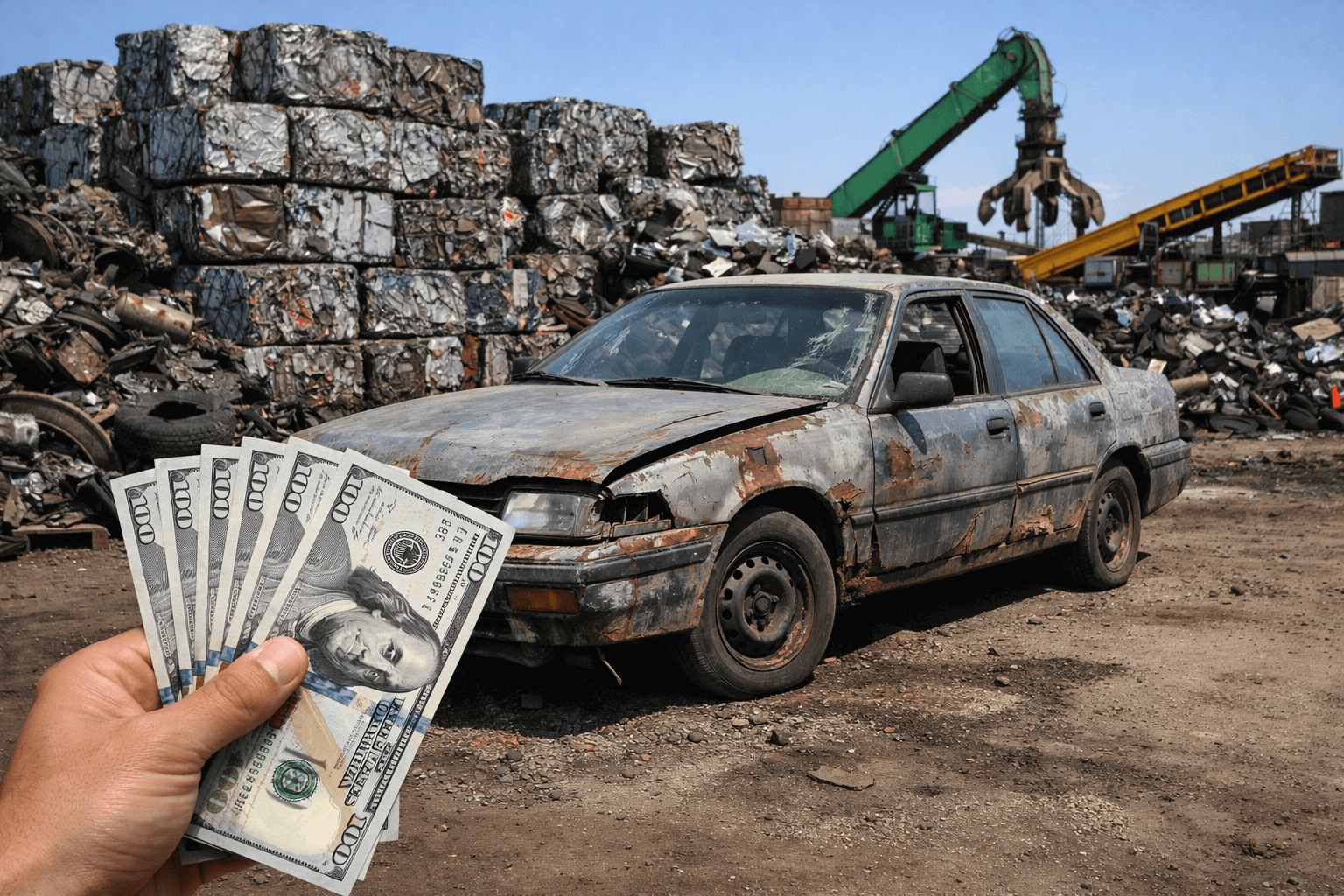
Quick Answer: Most car owners receive between $200 and $1,500 when scrapping their vehicle, depending on weight, condition, location, and current scrap metal prices. Smaller sedans typically fetch $200-$500, while SUVs and trucks can bring $500-$1,500 or more.
If you’re considering scrapping my car, you’re probably wondering whether it’s worth the effort and what factors actually determine your payout. I’ve worked with dozens of scrap yards and recycling facilities over the past decade, and I’ll walk you through exactly how this process works—no fluff, just the real numbers and insider knowledge you need.
Average Scrap Car Value: What to Actually Expect
The scrap car market operates primarily on weight-based pricing tied to steel and metal commodity markets. Here’s what different vehicle types typically bring:
| Vehicle Type | Average Weight | Typical Scrap Value |
|---|---|---|
| Compact Car (Honda Civic, Toyota Corolla) | 2,500-3,000 lbs | $200-$400 |
| Mid-Size Sedan (Toyota Camry, Honda Accord) | 3,200-3,500 lbs | $300-$550 |
| Full-Size Sedan (Chevy Impala, Ford Taurus) | 3,500-4,000 lbs | $400-$650 |
| SUV (Ford Explorer, Honda CR-V) | 4,000-5,000 lbs | $500-$900 |
| Pickup Truck (F-150, Silverado) | 4,500-6,000 lbs | $600-$1,500 |
| Large SUV/Van | 5,000-6,500 lbs | $800-$1,500+ |
Current scrap metal pricing (as of early 2025) averages $150-$250 per ton in most U.S. markets, though this fluctuates based on global steel demand, regional processing costs, and your specific location.
What Determines How Much You Get for Your Scrap Car
Vehicle Weight
This is the single biggest factor. Scrap yards pay based on the pounds of recyclable metal your car contains. A heavier vehicle means more steel, which translates directly to higher payouts. Most passenger vehicles contain 65-75% recyclable steel and iron by weight.
Current Scrap Metal Prices
Steel prices fluctuate daily based on commodity markets. When construction and manufacturing demand is high, scrap metal prices rise. During economic slowdowns, prices drop. This can affect your payout by $50-$200 depending on market timing.
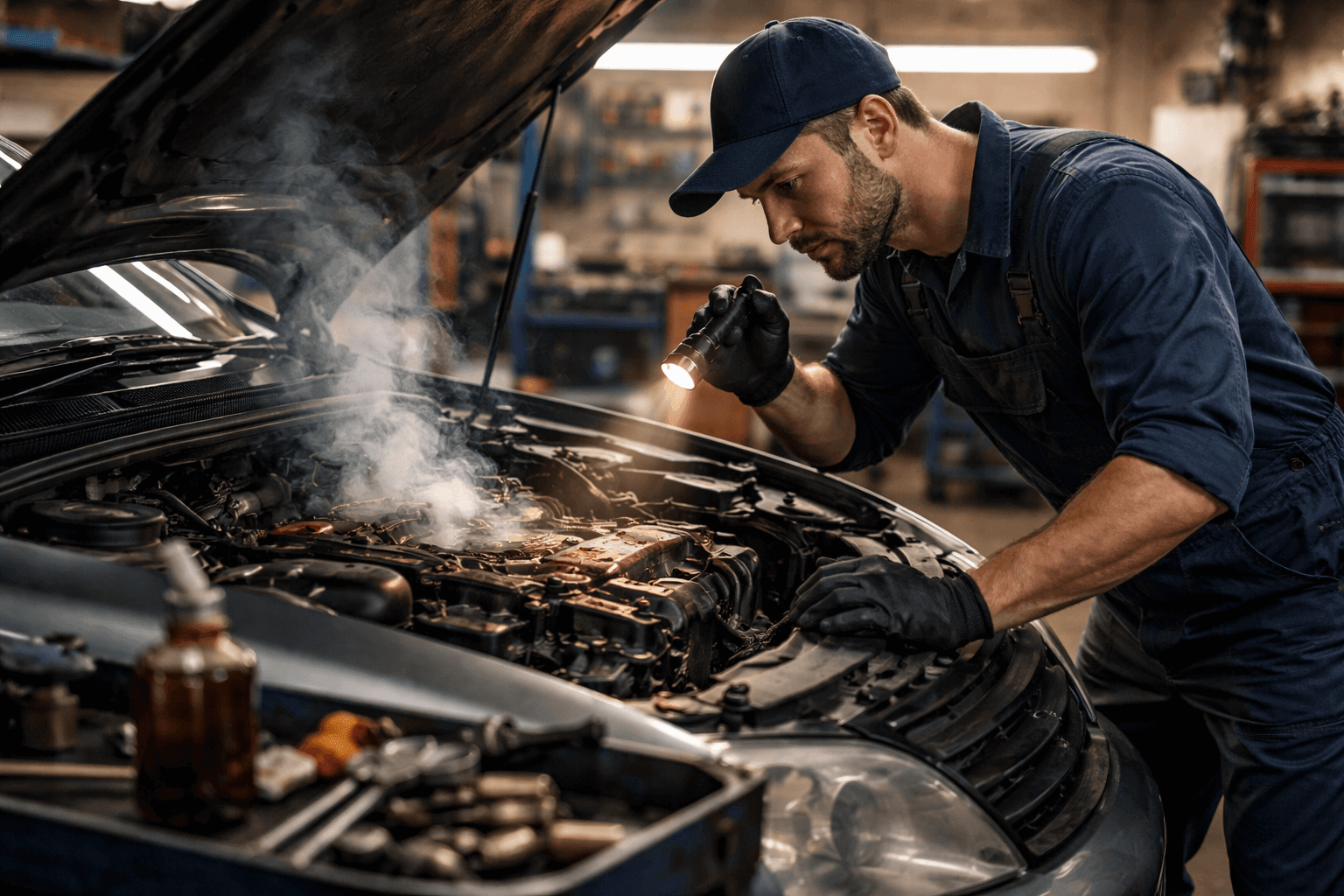
Vehicle Condition (Running vs Non-Running)
A car that runs and drives is worth more because:
- It has resaleable parts (engine, transmission, electronics)
- No towing costs are needed
- Parts can be tested before removal
Running cars often fetch $300-$800 more than identical non-running vehicles.
Catalytic Converter Value
This is huge. Catalytic converters contain precious metals (platinum, palladium, rhodium) worth $50-$1,500 depending on your vehicle’s make, model, and year. Some examples:
- Standard domestic car cat: $50-$150
- Toyota Prius cat: $500-$1,400
- Luxury vehicle cats: $400-$1,000+
- Diesel truck cats: $200-$800
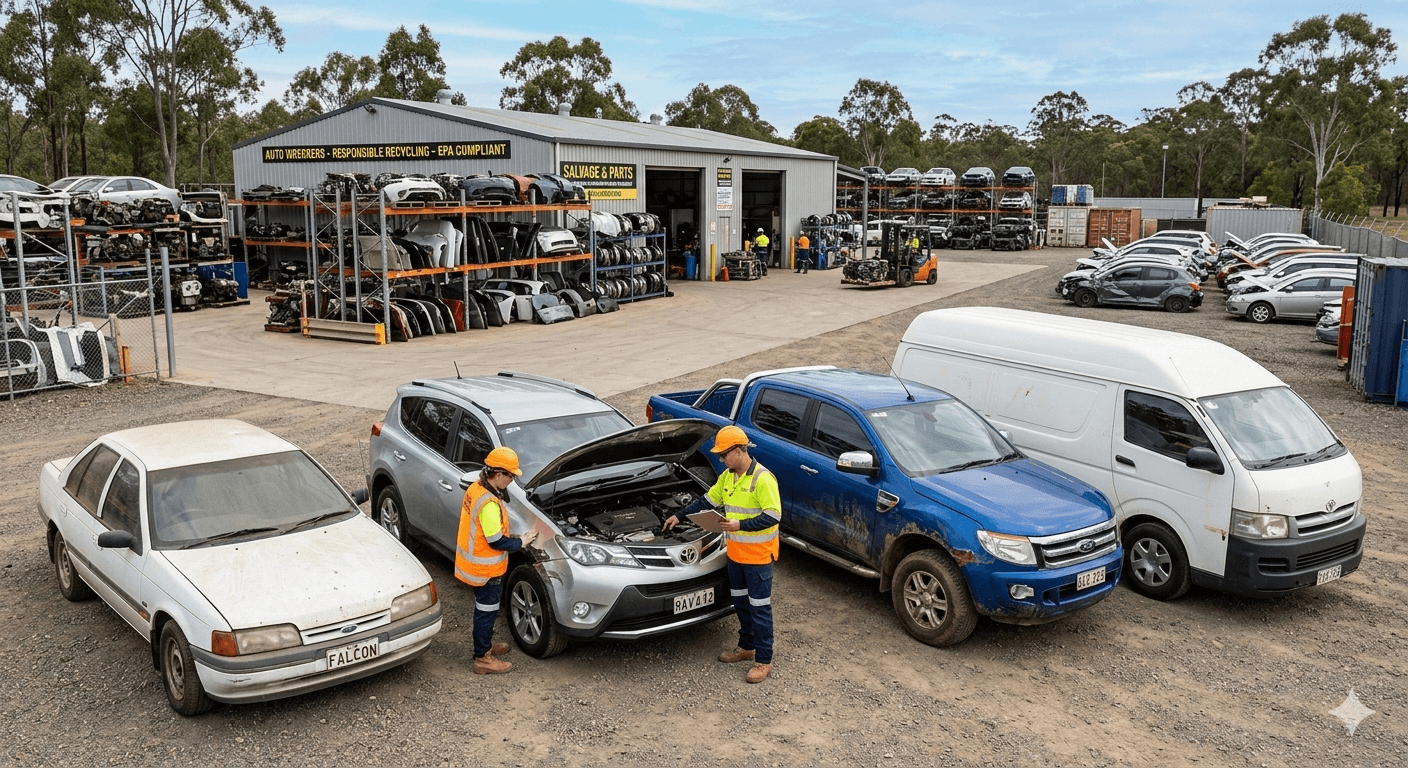
Usable Parts and Components
Yards that resell parts will pay more for vehicles with valuable components:
- Working engines and transmissions
- Good condition body panels
- Intact airbags and electronics
- Wheels and tires in decent shape
- Complete interior components
Make, Model, and Year
Certain vehicles have higher demand for parts. Popular models (Honda Accord, Toyota Camry, Ford F-150) command better prices because yards can easily resell components. Rare or older vehicles with limited parts demand typically only fetch base scrap metal value.
Location and Regional Pricing
Scrap prices vary significantly by region:
- West Coast/Urban areas: Often $20-$50 higher per ton
- Rural areas: Lower due to transportation costs
- Midwest/Industrial regions: Middle-range pricing
- Northeast: Generally higher due to processing infrastructure
Towing and Transportation Fees
Many yards offer “free towing,” but this cost is built into your quote. If you can deliver the vehicle yourself, you might negotiate $50-$150 more. Always ask if the quoted price includes pickup.
Title Status
Having a clear title in your name maximizes value. Without proper paperwork, many legitimate yards won’t accept your vehicle, forcing you to use lower-paying “no title” buyers who deduct $50-$200 for increased processing hassle.
Running vs Non-Running: The Value Difference
Running Vehicles
When your car still starts and drives:
- Scrap + parts value: $500-$2,000+
- Yards can test and resell major components
- Engine, transmission, and electronics have verified functionality
- You might get more selling to a salvage auction or parts buyer
Non-Running Vehicles
For cars that don’t start or have major mechanical issues:
- Scrap metal value only: $200-$800
- Limited parts resale potential
- Higher processing costs for the yard
- Catalytic converter still adds value
Pro tip: If your car runs but has expensive repair needs ($1,500+), getting quotes from both scrap yards and salvage buyers helps determine the best option. Sometimes a “parts car” buyer will pay significantly more than straight scrap value.
How Scrap Yards Actually Calculate Your Price
Here’s the behind-the-scenes process most facilities use:
Step 1: Weight Estimation
The buyer estimates your vehicle’s weight based on make/model. They know a 2015 Honda Civic weighs approximately 2,800-3,000 pounds.
Step 2: Apply Current Rate
They multiply weight by their current price per ton. If paying $200/ton:
- 3,000 lbs ÷ 2,000 lbs/ton = 1.5 tons
- 1.5 tons × $200 = $300 base price
Step 3: Adjust for Condition
- Add $100-$300 for running condition
- Add $50-$500+ for valuable cat converter
- Add $50-$200 for resaleable parts
- Subtract $50-$150 for missing wheels, damaged frame, or missing components
Step 4: Factor in Costs
- Towing/pickup costs (if applicable)
- Processing and depollution fees
- Title transfer handling
- Profit margin
Step 5: Final Offer
The number they quote includes all these calculations. Most yards aim for 30-40% profit margin after processing costs.
How to Get the Most Money for Scrapping Your Car
1. Get Multiple Quotes
Call at least 3-5 local scrap yards and junk car buyers. Prices can vary by $100-$400 for the same vehicle. Ask specifically:
- “Is this price with free towing included?”
- “Does this include the full value of my catalytic converter?”
- “Can I get more if I deliver it myself?”
2. Time the Market
If you’re not in a rush, monitor scrap metal prices. Websites like Scrap Metal Pricer or calling local yards monthly can help you identify price trends. Waiting 2-3 months during an upswing can add $75-$200 to your payout.
3. Check Your Catalytic Converter Value Separately
For vehicles with valuable cats (Prius, luxury cars, diesel trucks), consider:
- Getting standalone cat quotes from specialty buyers
- Selling the cat separately, then scrapping the rest
- This can add $200-$800 in some cases
Legal note: Only remove parts from vehicles you fully own. Some states require licensed dismantlers to handle cat converter removal due to theft concerns.
4. Remove Valuable Personal Parts
If legal in your area and you’re mechanically inclined:
- Aftermarket stereo systems
- Custom wheels (replace with cheap alternatives)
- New batteries
- Specialty equipment
Don’t remove parts that significantly decrease the car’s weight or running condition, as this may reduce your overall offer.
5. Have Your Title Ready
Complete, clean paperwork means faster transactions and better offers. If you’ve lost your title, apply for a duplicate through your DMV before getting quotes—this typically costs $10-$25 but can increase your payout by $100-$200.
6. Consider Part-Out Value for Certain Vehicles
Popular models with good parts demand might bring more through part-by-part sales. This requires time, space, and mechanical knowledge, but can yield 2-3x more than straight scrapping. Best candidates:
- Honda Accord/Civic (1998-2015)
- Toyota Camry/Corolla (1995-2015)
- Ford F-150 (2004-2018)
- Jeep Wrangler (any year)
7. Ask About Special Promotions
Some yards run monthly specials or pay bonuses during slow periods. It never hurts to ask: “Do you have any current promotions or bonus programs?”
Is It Better to Scrap or Sell Privately?
| Option | Best For | Average Return | Time Required | Effort Level |
|---|---|---|---|---|
| Private Sale | Running cars worth $2,000+ | $1,500-$5,000+ | 2-6 weeks | High (listings, showings, negotiation) |
| Salvage Auction | Damaged but repairable cars | $500-$3,000 | 1-2 weeks | Medium (requires title, photos) |
| Parts Buyer | Popular models with good parts | $800-$2,500 | 3-7 days | Medium (negotiation, paperwork) |
| Scrap Yard | Non-running, old, or damaged beyond repair | $200-$1,500 | 1-3 days | Low (one call, quick pickup) |
| Donation | Tax deduction seekers | $500-$1,000 (tax value) | 1-2 weeks | Low (charity handles pickup) |
Decision framework:
- Car worth $3,000+ running? → Try private sale first
- Car worth $1,000-$3,000 with damage? → Get salvage auction quotes
- Car worth under $1,000 or doesn’t run? → Scrap it
- Need it gone immediately? → Scrap yard for convenience
How Much Can I Get for Scrapping My Car Near Me?
Local pricing varies significantly based on several regional factors:
Regional Steel Market Prices:
Areas near steel mills or industrial centers typically pay more because transportation costs are lower. For example, Pittsburgh or Gary, Indiana might offer $20-$40 more per ton than remote rural areas.
State Regulations:
States with strict environmental or vehicle disposal laws sometimes have higher processing costs, which can reduce payouts by $50-$100. Conversely, states with robust recycling infrastructure often see competitive pricing.
Local Competition:
Markets with multiple scrap yards competing for vehicles tend to offer better prices. Urban and suburban areas usually have more options than rural regions.
Transportation Costs:
If you’re more than 30-50 miles from the nearest yard, towing costs reduce your offer. Delivering the vehicle yourself can add $75-$150 to your payout.
Best practice:
Search “junk car buyers near me” or “scrap yards near [your city]” and call at least 3-5 local options. Ask for specific quotes including all fees, and confirm whether towing is included.
Frequently Asked Questions
How much is a car worth per ton in scrap?
Currently, scrap cars fetch $150-$250 per ton depending on your location and current steel market prices. This translates to roughly $100-$200 per 1,000 pounds. Urban areas and West Coast regions typically see higher rates, while rural locations may be $20-$40 less per ton.
Do I need a title to scrap my car?
Most legitimate scrap yards require a title to prevent stolen vehicle processing. Some states allow scrapping without a title if the car is over 10-15 years old, but expect to receive $100-$300 less. Contact your local DMV for a duplicate title before scrapping—it’s worth the $15-$25 fee.
Can I scrap a car without wheels?
Yes, but you’ll receive less money. Missing wheels reduce vehicle weight and create handling difficulties for the yard. Expect a deduction of $50-$150 for missing wheels or tires. A complete car with wheels is always worth more.
Does a catalytic converter increase scrap value?
Absolutely. Catalytic converters contain precious metals worth $50-$1,500 depending on your vehicle. Many scrap yards break out cat value separately, so ask specifically how much they’re paying for yours. Some vehicles (Prius, luxury brands) have exceptionally valuable cats.
Are scrap car prices going up?
Scrap prices fluctuate with global steel demand and economic conditions. In early 2025, prices have stabilized in the $150-$250 per ton range after volatility in previous years. Monitor commodity markets or call local yards monthly to track trends in your area.
Who pays the most for junk cars?
Generally, licensed auto recyclers and salvage yards that resell parts pay more than pure scrap metal yards. Online buyers like Peddle, Copart Direct, or CarBrain often compete aggressively on price. Always get 3-5 quotes to find the best local offer for your specific vehicle.
How quickly can I get cash for my scrap car?
Most scrap yards offer same-day or next-day pickup with payment upon pickup. The process typically takes 1-3 days from initial call to cash in hand. Some online buyers can pick up within 24-48 hours and offer instant online quotes.
What happens to my car after it’s scrapped?
Your vehicle goes through depollution (fluids removal), then parts are inventoried and resold if valuable. The remaining shell is crushed, shredded into fist-sized pieces, and sent to steel mills where metal is melted down and recycled into new products—from rebar to new car frames.
Conclusion
The amount you can get for scrapping your car typically ranges from $100 to $500, depending on several key factors. Your vehicle’s weight, current scrap metal prices, and condition significantly impact the final payout. Larger vehicles with more metal generally fetch higher prices, while fluctuating steel and aluminum markets affect rates daily. To maximize your return, remove valuable parts beforehand, compare quotes from multiple scrap yards, and ensure you have proper documentation ready. While scrapping won’t make you rich, it’s an environmentally responsible way to dispose of an undriveable vehicle while putting some cash in your pocket—certainly better than letting it rust away unused.