Are There Any Fees for Car Disposal Services?
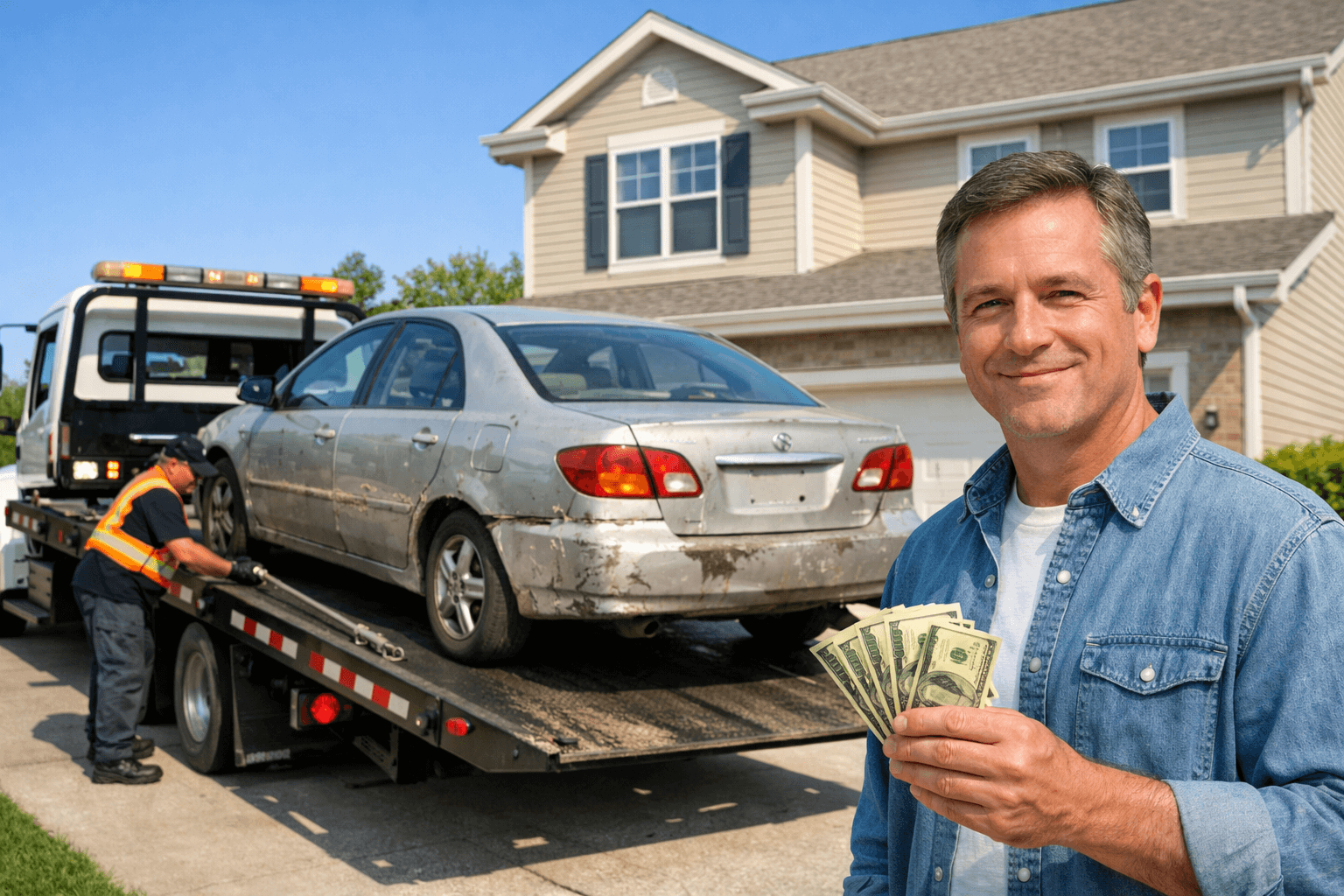
If you’ve got a clunker sitting in your driveway and you’re wondering whether getting rid of it will cost you money, you’re not alone. The short answer: it depends—but in many cases, you shouldn’t pay a dime. In fact, you might even get paid.
Here’s what most people don’t realize: the car disposal industry runs on salvageable materials. Your “junk” car contains scrap metal, reusable parts, and sometimes valuable components like catalytic converters. Reputable disposal companies make money by recycling these materials, which means they can often afford to pick up your vehicle for free—and even pay you for it.
That said, certain situations can trigger fees, and knowing the difference between legitimate charges and unnecessary costs can save you hundreds of dollars. This guide breaks down exactly when car disposal is free, when you might pay, and how to maximize what you get out of the process.
Is Car Disposal Really Free?
Yes, car disposal can be completely free—and it often is. But whether you’ll pay depends on your vehicle’s condition, location, and the service you choose.
When it’s truly free:
Most licensed junk car removal companies offer free towing and pickup if your vehicle has salvage value. This typically applies to cars that weigh at least 2,000 pounds and contain recoverable metal or parts. Even if your car doesn’t run, companies will haul it away at no cost because they profit from the scrap metal market.
For example, a 2008 Honda Accord that won’t start still contains about 3,000 pounds of steel, aluminum, and other metals. At current scrap prices (around $150-$300 per ton), that’s $225-$450 in raw material value—enough to cover towing costs and leave the buyer with profit.
When companies charge:
Fees typically come into play when the logistics outweigh the vehicle’s value. This happens with:
- Very small vehicles (motorcycles, ATVs) with minimal scrap weight
- Cars in extremely remote areas where towing exceeds 50+ miles
- Vehicles in inaccessible locations (basement garages, behind fences)
- Stripped cars with missing major components
Geographic differences matter:
In urban areas like Los Angeles, Chicago, or Houston, competition among scrap yards keeps services free. Rural areas can be different. If you’re 100 miles from the nearest salvage yard in rural Montana, some companies might charge a distance fee or offer a lower payout to offset transportation.
Local scrap metal pricing also varies. States with active recycling industries (California, Texas, Florida) tend to have more competitive free removal services than states with fewer facilities.
When Do You Have to Pay for Car Disposal?
While most disposal situations are free, certain circumstances can trigger legitimate fees. Understanding these upfront helps you avoid surprises.
Missing or problematic title:
Most states require a vehicle title to transfer ownership legally. If you’ve lost yours, you’ll need to request a duplicate from your DMV before disposal. This costs $15-$50 depending on your state and takes 1-3 weeks.
Some junk car buyers accept vehicles without titles if they’re older than 10-15 years (varies by state), but they’ll pay significantly less—sometimes 20-40% below market value. They’re not charging a fee per se, but you’re effectively paying through reduced payout.
Inaccessible vehicle locations:
Standard free towing assumes the car is on a driveway, street, or easily accessible property. If your vehicle is:
- Stuck in a backyard with no direct access
- Inside a locked garage requiring special equipment
- On a steep hill or unstable ground
Towing companies may charge $75-$200 for winching or specialized equipment. Always mention access issues when getting quotes.
Remote or rural locations:
Free towing typically covers a 25-50 mile radius from the junkyard. Beyond that, expect either:
- A distance fee ($1-$3 per mile over the limit)
- A reduced offer that factors in towing costs
- No service at all in extremely remote areas
If you’re in a rural location, call local scrap yards first. Regional buyers often have better coverage than national car removal companies.
Hazardous or abandoned condition:
Vehicles that pose environmental or safety risks can incur additional charges:
- Leaking fluids requiring cleanup: $50-$150
- Biohazard conditions (rodent infestation, mold): $100-$300
- Hoarding situations with debris inside: $75-$200
Professional disposal companies must handle hazardous materials properly under EPA regulations, and these costs get passed to you if the situation requires special handling.
Storage and impound fees:
If your car is at an impound lot or tow yard, you’re responsible for accumulated storage fees—typically $30-$75 per day. These charges aren’t from the disposal company but from the facility holding your vehicle.
Some junkyards will pay off smaller impound bills (under $500) and deduct it from your payout. For larger bills, you might need to negotiate directly with the impound lot or sign over your vehicle to settle the debt.
Can You Actually Get Paid for Car Disposal?
Absolutely. In most cases, you should expect payment for your junk car—not the other way around.
How scrap pricing works:
Junk car buyers calculate offers based on:
- Vehicle weight: The primary factor. Scrap steel prices fluctuate between $100-$400 per ton (2,000 pounds). A typical sedan weighing 3,000-3,500 pounds generates $150-$700 in base scrap value.
- Reusable parts: Engines, transmissions, doors, and electronics add value. A working engine can add $200-$800 to your offer, even if the rest of the car is totaled.
- High-value components: Catalytic converters contain platinum, palladium, and rhodium. Depending on your vehicle’s make and model, these alone can be worth $100-$1,500.
- Make and model demand: Popular vehicles like Honda Accords, Toyota Camrys, and Ford F-150s have higher parts demand, which increases offers.
Typical payout ranges (2026):
- Non-running sedan (2000-2010): $200-$600
- Running older vehicle: $400-$1,500
- Truck or SUV: $300-$1,000
- Luxury car (parts value): $500-$2,000
- Vehicle with sought-after catalytic converter: Add $200-$1,500
These are averages. Actual offers depend on current scrap metal prices, which fluctuate with global commodity markets.
When you’ll get the most money:
The scrap metal market is cyclical. Prices tend to rise during:
- Construction booms (increased steel demand)
- Manufacturing expansions
- Global supply shortages
Conversely, prices drop during economic slowdowns. If you’re not in a rush, monitoring scrap prices for a few weeks can potentially increase your payout by 10-20%.
The catalytic converter factor:
This single component can make or break your deal. Thieves target catalytic converters because they’re valuable, but legitimate buyers want them too.
Vehicles with high converter values include:
- Toyota Prius (2004-2009): $700-$1,200
- Honda Element: $800-$1,400
- Ford F-250/F-350: $300-$800
- Dodge Ram 2500: $400-$900
If your converter has been stolen, disclose this upfront. Your offer will drop by the converter’s value, but you’ll still get paid for the rest of the vehicle.
Hidden Fees to Watch Out For
Not all car disposal companies operate with full transparency. Here are the fees that sometimes appear after you’ve agreed to service:
- Administrative or processing fees: Some companies charge $25-$75 to “process paperwork.” This is usually unnecessary—most legitimate buyers include this in their business costs.
- Title transfer charges: While you’re responsible for getting your title, some companies add a $30-$50 fee to “handle” the transfer. This should be included in their service.
- Same-day or expedited pickup surcharge: Need your car gone today? Some companies charge $50-$100 for immediate service. If you’re not in a rush, schedule for later in the week.
- Cancellation fees: A few contracts include penalties ($50-$150) if you cancel after scheduling. Reputable companies don’t charge this—they just move on to the next customer.
- Towing mileage caps: The fine print might say “free towing up to 30 miles” when you assumed it covered your 45-mile distance. Always confirm the exact coverage radius.
- Partial payment schemes: Some buyers offer $X over the phone but show up and claim the car is “worth less than expected,” then offer 30-50% less. This is a bait-and-switch tactic.
How to protect yourself:
Get everything in writing. Before the tow truck arrives, confirm via email or text:
- Exact payment amount
- Any and all fees
- Towing distance coverage
- Payment method and timing
If the driver arrives and tries to renegotiate, you’re under no obligation to accept. Send them away and call a different company.
Junkyard vs Car Removal Company vs Donation
Each disposal option has different cost structures and benefits. Here’s how they compare:
| Option | Typical Cost to You | Potential Payout | Towing | Convenience | Tax Benefits |
|---|---|---|---|---|---|
| Local Junkyard | $0 | $200-$1,500 | Usually free within 30 miles | Must arrange yourself | None |
| National Car Removal Service | $0 | $150-$800 | Free nationwide | Easy—one call | None |
| Private Buyer | $0 | Varies widely | You arrange | Time-consuming | None |
| Charity Donation | $0 | $0 (tax deduction) | Free | Easy | $500-$5,000 deduction |
| Scrap-It Programs | Varies | $500-$1,500 rebate | Free | Moderate | Possible state incentives |
Local junkyards typically offer the best cash value because they’re buying directly for resale and recycling. You cut out the middleman. The tradeoff: you handle more of the logistics.
National car removal companies (like Pick-n-Pull affiliates or 1-800-Junk-Car services) offer convenience. They operate in multiple states, provide quick pickup, and handle paperwork. However, they’re brokers—they sell your car to a junkyard and take a cut, reducing your payout by 15-30%.
Charity donation makes sense if your car is worth under $500 and you itemize deductions. You won’t get cash, but you can deduct the vehicle’s fair market value (or sale price if the charity sells it). For high earners in tax brackets above 24%, this can equal or exceed the scrap value.
State scrap-it programs (like California’s Vehicle Retirement Program) offer rebates for retiring older, high-polluting vehicles. These range from $500-$1,500 but have specific eligibility requirements.
How to Avoid Paying Any Fees
Follow these steps to ensure free disposal and maximize any payout:
1. Locate your vehicle title
This is the single most important document. Without it, you’ll either pay for a duplicate or accept a significantly reduced offer. If your title is lost:
- Contact your state DMV immediately
- Request a duplicate ($15-$50)
- Expedite if available ($30-$50 extra for 3-5 day processing)
2. Remove all personal belongings
Buyers aren’t responsible for your items, and you won’t get them back. Check:
- Glove compartment
- Under seats
- Trunk
- Sunglasses holders
- Door pockets
Also remove your license plates in states that require it (most states do). You’ll need to return these to the DMV to avoid future liability.
3. Drain valuable fluids (optional but can increase offers)
While not required, some buyers pay more for vehicles with:
- Full gas tank (they’ll use or resell the fuel)
- Intact battery (add $10-$30)
- Good tires (add $50-$150)
However, removing these yourself to sell separately might not be worth the effort unless you have a buyer lined up.
4. Get multiple quotes
Never accept the first offer. Call at least 3-5 buyers:
- 2-3 local junkyards
- 1-2 national removal services
- 1 private buyer or Craigslist listing (if you have time)
Prices can vary by $100-$500 for the same vehicle based on current inventory needs and scrap prices.
5. Ask about towing upfront
Specifically confirm:
- “Is towing completely free?”
- “What’s your coverage radius?”
- “Are there any additional fees?”
Get the answer in writing via email or text before scheduling pickup.
6. Verify payment method before pickup
Legitimate buyers pay on the spot with:
- Cash
- Cashier’s check
- Company check
- Instant electronic transfer
Be wary of buyers who promise to “mail a check later” or require you to sign title transfer documents before receiving payment.
7. Complete a bill of sale
Even for junk cars, protect yourself legally. A bill of sale should include:
- Buyer and seller names
- Vehicle VIN
- Sale price
- Date of transaction
- “As-is” condition statement
This protects you if the buyer later has issues or if the vehicle is involved in illegal activity after sale.
8. Notify your DMV and insurance company
After disposal, file a Notice of Transfer and Release of Liability with your state DMV (often available online). This ensures you’re not held responsible if the new owner doesn’t properly register or title the vehicle.
Cancel your insurance once the car is picked up to stop paying premiums on a vehicle you no longer own.
State-by-State Variation Explained
Car disposal regulations and costs vary significantly by state. Here’s what changes based on location:
Title requirements:
- Strict title states (California, New York, Illinois): You must have the title regardless of vehicle age. No exceptions.
- Relaxed title states (Texas, Georgia for vehicles 10+ years old): Junkyards can accept vehicles without titles if you provide ID and sign an affidavit.
- Vermont has no title for vehicles over 15 years old—a bill of sale suffices.
Emissions and environmental fees:
Some states charge disposal fees to fund environmental programs:
- California: $1.50 environmental fee (usually covered by buyer)
- Maryland: Potential $7 scrap tire fee per tire
- Rhode Island: $10 used oil fee
Legitimate buyers typically absorb these costs, but confirm this beforehand.
Impound and storage laws:
States have different rules about abandoned vehicles:
- In California, impound lots must hold vehicles for 30 days before sale
- In Florida, the hold period is just 3 days
- Storage fees vary from $20-$75 per day
If your car is impounded, act quickly. These fees accumulate fast and can exceed the vehicle’s value within weeks.
Impact of Scrap Metal Market Fluctuations
Your junk car’s value isn’t fixed—it changes with global commodity markets.
What drives scrap metal prices:
- Steel demand: Construction and manufacturing activity directly impact prices. During economic growth, scrap steel can hit $400+ per ton. During recessions, it can drop to $100-$150 per ton.
- International trade: China and India are major steel importers. When they’re building infrastructure, global scrap prices rise. Trade disputes or tariffs can cause sharp price drops.
- Seasonal patterns: Prices often dip in winter (slow construction season) and rise in spring/summer.
How this affects you:
If scrap steel is at $300 per ton and your 3,000-pound car is 75% steel, your base value is about $337. If prices drop to $150 per ton, that same car is worth $168—nearly 50% less.
Strategy for maximizing value:
If you’re not in immediate need of cash, monitor scrap prices at sites that track commodity markets. Waiting 4-8 weeks during an upward trend can increase your payout by $50-$200.
However, don’t wait too long. If your car is deteriorating, leaking fluids, or accumulating storage fees, the potential price increase won’t offset the losses.
How Electric Vehicle Disposal Differs
EVs and hybrids have unique disposal considerations that affect costs and payouts.
Battery recycling concerns:
Lithium-ion batteries are valuable but require specialized handling. Buyers need:
- Certified hazmat training
- Proper storage facilities
- Connections to battery recycling facilities
Not all junkyards accept EVs, which can limit your options and potentially reduce offers in areas with fewer specialized buyers.
Higher parts value:
EV components like electric motors, inverters, and battery management systems are worth significantly more than traditional combustion parts. A Tesla battery pack alone can be worth $3,000-$7,000 if serviceable.
Lower scrap metal weight:
EVs often weigh less than comparable gas vehicles because aluminum is used heavily. However, the valuable components typically more than offset the reduced scrap weight.
Typical EV disposal payouts (2026):
- Nissan Leaf (battery degraded): $800-$2,500
- Chevy Volt: $1,200-$3,000
- Tesla Model S (damaged): $5,000-$15,000
Tesla and luxury EVs maintain substantially higher value even when severely damaged due to expensive component demand.
Environmental Compliance Costs
Reputable disposal services must follow EPA and state environmental regulations for:
- Fluid drainage: Oil, coolant, brake fluid, transmission fluid, and gasoline must be properly captured and recycled
- Refrigerant recovery: AC systems must be evacuated by certified technicians
- Battery disposal: Lead-acid batteries require hazmat handling
- Airbag deployment: Undeployed airbags must be safely detonated
These processes cost disposal companies $50-$150 per vehicle. Legitimate buyers build these costs into their business model—you shouldn’t be charged separately.
Red flags for non-compliance:
If a buyer offers significantly above-market rates and asks you to drain fluids yourself or claims “we don’t worry about that EPA stuff,” they’re likely operating illegally. Using unlicensed disposal services can result in fines to you as the owner under environmental liability laws.
Always verify the buyer is:
- Licensed with your state DMV
- EPA-compliant for hazardous material handling
- Insured and bonded
FAQs
Do junkyards charge for pickup?
Legitimate junkyards do not charge for pickup if your vehicle has scrap value and you’re within their service radius (typically 25-50 miles). They profit from reselling parts and recycling metals, so towing is included as a standard business cost. You may pay a distance fee for remote locations beyond their normal coverage area, typically $1-$3 per mile over the limit.
Is towing really free?
Yes, with caveats. Free towing applies when your car is accessible from a driveway or street and you’re within the buyer’s coverage area. You’ll pay for towing if your vehicle requires special equipment (winching, flatbed for AWD), is in an extremely remote location (75+ miles from the junkyard), or is stuck in an inaccessible area like a fenced backyard. Always confirm towing terms in writing before scheduling pickup.
What if I lost my car title?
You’ll need to obtain a duplicate title from your DMV before most buyers will accept your vehicle. This costs $15-$50 and takes 1-3 weeks (or 3-5 days with expedited service for an extra fee). Some states allow junkyards to accept vehicles over 10-15 years old without titles, but you’ll receive 20-40% less than the standard offer because buyers assume additional legal risk.
Do I pay DMV fees when scrapping a car?
You don’t pay fees to scrap your car, but you should file a Notice of Transfer and Release of Liability with your DMV after sale (usually free or $5-$15). This protects you from future liability if the buyer doesn’t properly process the title. Some states require you to return license plates to the DMV within 30 days of sale. Failure to do so can result in late registration fees if the plates aren’t officially canceled.
Are there environmental disposal charges?
A few states impose small environmental fees ($1.50-$10) to fund recycling programs, but legitimate buyers include these in their operating costs—you shouldn’t be charged separately. If a buyer tries to add an “environmental disposal fee” as a line item, this is typically unnecessary. However, if your vehicle requires special hazmat cleanup (major fluid leaks, biohazard conditions), you may be charged $50-$300 for proper handling.
Can I donate my car instead of scrapping it?
Yes, and donation can be worthwhile if your car is worth under $500 and you itemize tax deductions. Charities provide free towing and you can deduct either the charity’s sale price or the vehicle’s fair market value (if under $500). For vehicles worth more than $500, you can only deduct the actual sale price, which charities must report via Form 1098-C. If your car has significant scrap value ($600+), selling it directly and donating the cash gives you more financial benefit.
How quickly can I get my car removed?
Most junk car buyers offer same-day or next-day pickup in urban and suburban areas. Rural locations may require 2-5 days for scheduling. If you need immediate removal, call local junkyards first—they typically respond faster than national car removal services. Some companies charge $50-$100 for same-day expedited service, so if timing isn’t urgent, schedule 2-3 days out to avoid this fee.
What happens to my car after disposal?
The buyer will drain fluids, remove valuable parts for resale, extract the catalytic converter, and crush the remaining shell into a metal cube. The metal is sold to recycling facilities that melt it down for use in new steel products. Usable parts go to auto repair shops or individuals. The entire process typically takes 30-60 days from pickup to final recycling. About 80-90% of a scrapped car gets recycled—very little ends up in landfills.
Conclusion
Car disposal fees are largely avoidable when you work with reputable buyers and prepare properly. In most cases, you shouldn’t pay anything—legitimate companies offer free towing and often pay you for your vehicle’s scrap value. The key is understanding when fees are justified versus when you’re being overcharged. Always get multiple quotes, confirm all terms in writing, and have your title ready. Whether your car is worth $200 or $2,000, taking time to compare options ensures you maximize value while avoiding unnecessary costs. Remember: your junk car has worth, and disposal should reflect that reality.