What Should I Do With My Car Title When Disposing of My Vehicle in Australia?
When it comes to disposing of a vehicle in Australia — whether you’re scrapping a damaged car, selling an unregistered vehicle, or handing it over to a licensed car wrecker — the handling of your car title and proof of ownership is one of the most important legal steps you’ll take.
Get it wrong and you could be held liable for fines, toll charges, accidents, and even fraud long after the car has left your hands. Get it right, and the process is quick, clean, and stress-free.
This guide explains exactly what happens to a car title when you dispose of your vehicle in Australia, covering all disposal scenarios — selling privately, working with a wrecker, scrapping, and donating — plus state-specific procedures for NSW, VIC, and QLD.
What Is a Car Title in Australia?
In Australia, there is no single physical document called a “car title” in the way some other countries use the term. Instead, proof of vehicle ownership is established through a combination of your vehicle’s registration certificate issued by your state or territory’s road authority, your name listed as the registered operator in the state motor vehicle registry, and supporting purchase documents (receipt, transfer form) showing the chain of ownership.
In NSW, the relevant authority is Transport for NSW. In Victoria, it’s VicRoads. In Queensland, the Department of Transport and Main Roads (TMR) oversees vehicle registration and ownership records.
Being the registered operator in the system does not automatically mean you’re the legal owner, but practically speaking, registration records are the primary evidence used when transferring, scrapping, or disposing of a vehicle. Legal responsibility for the vehicle — including any fines, accidents, or road offences — rests with the registered operator until a proper transfer or disposal notice is completed.
Do You Need the Car Title to Scrap or Sell a Vehicle?
Yes — in almost all cases, proof of ownership is required before a licensed car wrecker, recycler, or buyer can take possession of your vehicle. This protects both parties and ensures the vehicle is not stolen or subject to a finance encumbrance.
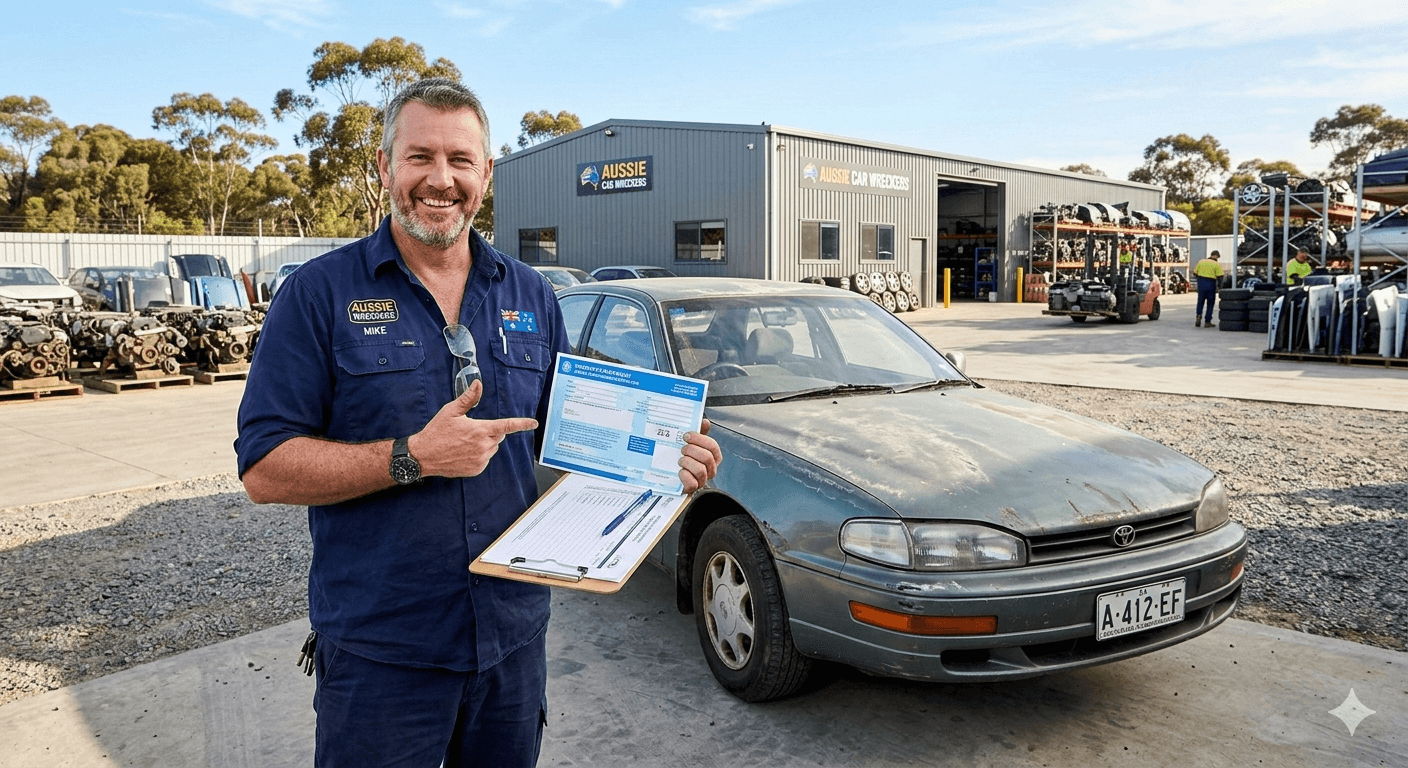
When selling to a registered car wrecker or dismantler in Australia, you will generally need to provide photo identification (driver’s licence or passport), the vehicle’s registration certificate or transfer paperwork, and confirmation that no money is owed on the vehicle (finance clearance).
There are exceptions for lost documents, deceased estates, or abandoned vehicles. In these cases, you may be required to lodge a statutory declaration with your state road authority before the disposal can proceed. Cars Wreckers can assist with guidance on this process.
What Happens to the Car Title When You Dispose of a Car?
Selling Privately
When you sell a vehicle privately in Australia, ownership is transferred through a formal process managed by your state road authority. The seller is responsible for completing the transfer of registration form (available from your state road authority), recording the buyer’s full name, address, and licence details, and submitting a Notice of Disposal to your state road authority. This is critical — it formally removes your legal responsibility from the vehicle from the date of sale.
The buyer then has a limited time (usually 14 days in most states) to transfer registration into their name. Until they do, your Notice of Disposal protects you from any liability that may arise.
Selling to a Car Wrecker
Selling to a licensed car wrecker — such as Cars Wreckers — simplifies the process considerably. The wrecker will verify your identity and ownership before taking possession of the vehicle. Once confirmed, they handle the disposal documentation on their end as a licensed vehicle buyer.
You should still submit your own Notice of Disposal through your state road authority’s portal or service centre to formally close your connection to the vehicle. Cars Wreckers provides you with a receipt of purchase and disposal confirmation for your records.
Scrapping or Recycling
When a car is scrapped or recycled at the end of its life, the process involves deregistration of the vehicle (cancellation of registration), return or cancellation of number plates (requirements differ by state), and formal closure of the vehicle’s registration record in the state system.
Once a vehicle is deregistered and handed to a licensed recycler, the title is effectively closed. The vehicle’s VIN is flagged in the national database as scrapped, preventing it from being re-registered.
Donating a Vehicle
Donating a car to a registered charity requires the same ownership transfer steps as a private sale. You complete the transfer of registration form, record the charity’s details, and submit a Notice of Disposal. From a tax perspective, vehicle donations to registered charities may be eligible for a deduction — speak with your accountant or the ATO for current guidelines.
How to Transfer Ownership When Disposing of Your Car in Australia
Step 1: Confirm you are the registered operator. Log into your state authority’s online portal or check your registration certificate. Your name must be listed as the current registered operator.
Step 2: Complete the transfer of registration form. This form is available through Transport for NSW, VicRoads, or Queensland TMR. When selling to a wrecker, the wrecker will complete the buyer’s section.
Step 3: Submit a Notice of Disposal. This is the most important step for protecting yourself legally. Submit through your state authority’s website, app, or service centre as soon as the vehicle changes hands.
Step 4: Cancel registration (if scrapping). If the vehicle is being scrapped rather than on-sold, cancel the registration through your state authority. You may be entitled to a pro-rata refund of unused registration.
Step 5: Remove your insurance. Contact your insurer to cancel comprehensive or third-party insurance on the disposed vehicle and request a refund if you’ve paid in advance.
What If You’ve Lost Your Car Title or Registration Papers?
A lost registration certificate or transfer paperwork does not have to halt your disposal plans. You can apply for a replacement registration certificate through your state road authority (available online in most states), lodge a statutory declaration confirming your ownership and the circumstances of the loss, or contact Cars Wreckers — our team regularly assists customers in navigating lost document scenarios and can advise on the appropriate steps based on your state.
In cases involving deceased estates or inherited vehicles, additional documentation such as probate papers or letters of administration may be required. State road authorities have dedicated processes for these situations.
Risks of Not Transferring Your Car Title
Failing to correctly transfer ownership or submit a Notice of Disposal after disposing of your vehicle can have serious consequences.
Toll fines and traffic infringements:
If the new owner drives through tolls or receives speeding fines before transferring registration, you remain legally liable until your Notice of Disposal is on record.
Accident liability:
If the vehicle is involved in an accident while still registered in your name, you may face legal complications.
Registration renewal notices:
You may continue to receive registration renewal notices and be held responsible for unpaid registration fees.
Fraud risk:
A vehicle still in your name can be a vulnerability if it’s reported stolen or involved in fraudulent activity.
The simple act of submitting a Notice of Disposal immediately after handing over your vehicle eliminates the vast majority of these risks.
How Car Wreckers Handle Vehicle Title & Paperwork
Cars Wreckers is a licensed vehicle buyer operating in compliance with Australian transport authority regulations. When you sell your vehicle to us, here’s what you can expect:
Ownership verification:
We verify your identity and confirm vehicle ownership before any transaction proceeds.
Transfer compliance:
Our team completes the required buyer sections of the transfer form in accordance with state requirements.
Instant disposal documentation:
You receive a receipt and disposal confirmation on the day of collection.
Hassle-free pickup:
We come to you — no need to tow the car to a yard or navigate complex paperwork alone.
Legal peace of mind:
With a licensed wrecker managing the process, you’re protected from future liability related to the vehicle.
We strongly encourage all customers to also submit their own Notice of Disposal through their state road authority’s portal on the day of sale — it takes less than five minutes online and provides an additional layer of legal protection.
State-Specific Notes for Vehicle Disposal in Australia
New South Wales (NSW)
In NSW, you submit your Notice of Disposal through the Service NSW website or app. Number plates stay with the vehicle when selling privately unless you choose to retain personalised plates. When scrapping, plates are returned to Transport for NSW. Registration cancellation can be done online through MyServiceNSW.
Victoria (VIC)
VicRoads requires the seller to complete a Notice of Disposal online through the VicRoads portal. When you sell or scrap a vehicle, you can either transfer the number plates to another vehicle you own or surrender them to VicRoads. VicRoads processes registration refunds for cancelled registrations.
Queensland (QLD)
In Queensland, the Notice of Disposal is submitted through the Queensland TMR’s online portal. Queensland has a specific process for written-off vehicles (WOVs), which are inspected and recorded on the Written-Off Vehicle Register before disposal. Number plates in QLD are returned when deregistering a vehicle.
Checklist: What to Do With Your Car Title Before Disposal
- Confirm you are listed as the registered operator with your state road authority
- Gather your registration certificate and photo ID
- Check for any outstanding finance on the vehicle
- Complete the transfer of registration form with the buyer or wrecker’s details
- Submit your Notice of Disposal through your state authority’s online portal immediately after handover
- Cancel registration if the vehicle is being scrapped (apply for any pro-rata refund)
- Cancel your comprehensive or third-party insurance on the vehicle
- Retain copies of the transfer receipt and disposal notice for your records
- If plates need to be returned, arrange this through your state road authority
Frequently Asked Questions
Do I keep my car title after selling my car in Australia?
There is no single “car title” document in Australia. After selling your vehicle, retain your copy of the transfer form and the confirmation of your Notice of Disposal. These serve as your proof that you are no longer the registered operator of the vehicle.
Do wreckers transfer ownership for you?
Licensed wreckers like Cars Wreckers complete their section of the vehicle transfer process. However, you, as the seller, are responsible for submitting your own Notice of Disposal through your state road authority — this step cannot be done by the wrecker on your behalf. It’s a simple online process that takes only a few minutes.
Can I scrap a car without registration papers?
It is more difficult but not impossible. You may need to apply for a replacement registration certificate from your state road authority or lodge a statutory declaration confirming ownership. Contact Cars Wreckers to discuss your specific situation — we regularly assist customers with lost document scenarios.
Who notifies the transport authority when I sell my car?
Both parties have obligations. As the seller, you must submit a Notice of Disposal through your state road authority. As the buyer (in a private sale), the new owner must transfer registration into their name within the required timeframe — usually 14 days. Licensed wreckers manage their own registration obligations with the relevant authority.
Do I need to return number plates when scrapping a car?
This depends on your state. In Queensland, plates must be returned to Queensland TMR when deregistering a vehicle. In Victoria, you can transfer plates to another vehicle or surrender them to VicRoads. In NSW, standard plates generally stay with the vehicle, but personalised plates must be transferred or surrendered separately.
Conclusion
Disposing of a vehicle in Australia involves more than just handing over the keys. Correctly transferring your car title and submitting a Notice of Disposal protects you from ongoing fines, liability, and legal complications. Whether you’re selling privately, scrapping, or working with a licensed wrecker, the steps are straightforward when you know what’s required. Cars Wreckers makes the process even easier — we handle the paperwork, verify ownership, and provide same-day pickup across Australia. Don’t leave yourself exposed after your car is gone. Submit your disposal notice, cancel your rego, and let Cars Wreckers take care of the rest.