How Do You Know If Your Car Is Burning Oil?
How Do You Know If Your Car Is Burning Oil?
Your oil light hasn’t come on. You can’t spot any drips under the car. But every few weeks you’re back at the servo topping up the oil. If your car is losing oil but there’s no obvious leak, there’s a good chance it’s burning oil internally — and ignoring it can turn an annoying problem into an engine rebuild. Here’s how to know for certain, and what to do about it.
📚 In This Guide
6 Key Signs Your Car Is Burning Oil
Many Brisbane drivers notice something’s off but can’t pinpoint the cause. Their car runs okay, there’s no obvious leak, yet the oil level keeps dropping. These are the tell-tale signs you’re dealing with oil combustion inside the engine rather than a leak underneath it.
Blue or Grey Exhaust Smoke
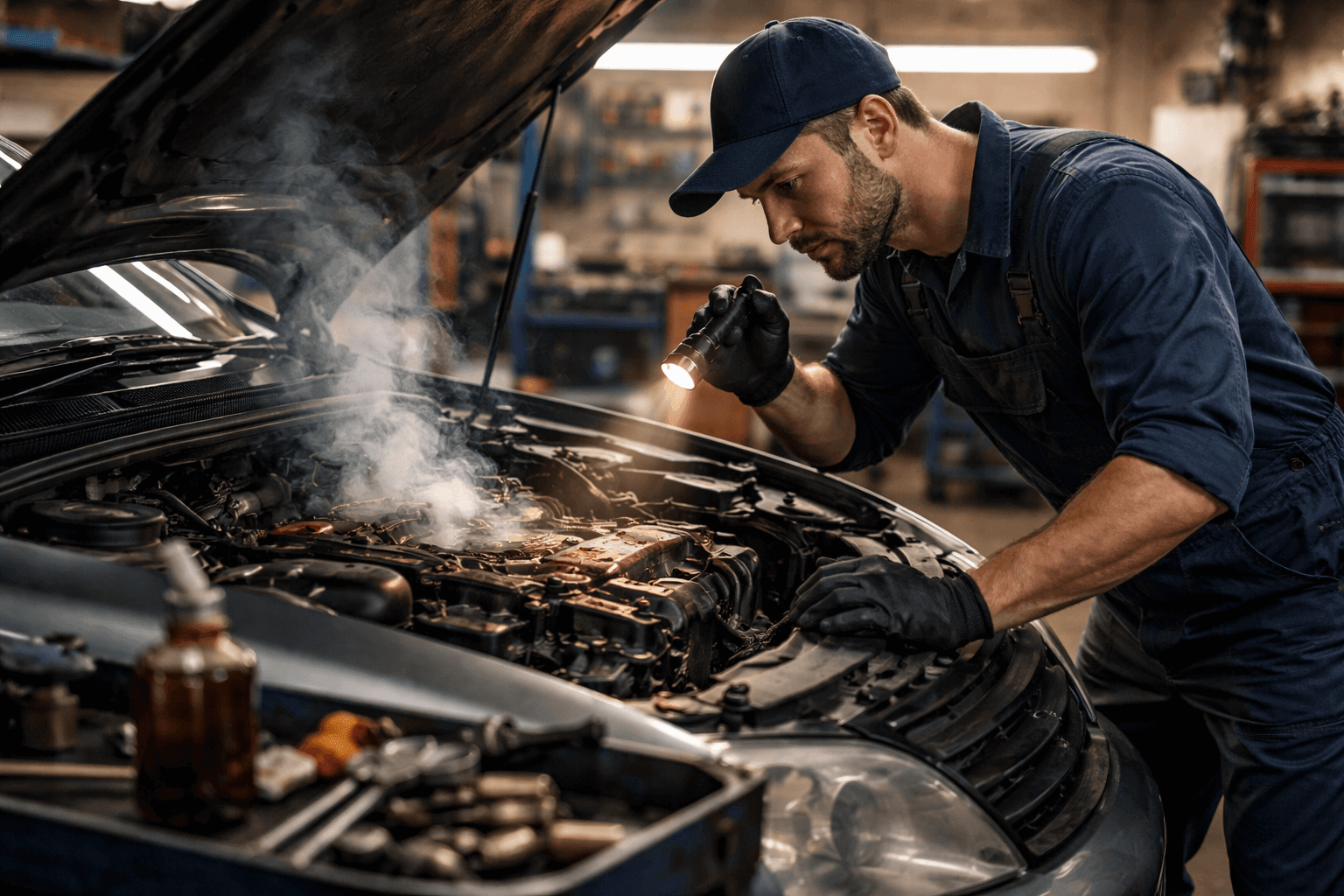
This is the most obvious giveaway. Blue or blue-grey smoke from the exhaust pipe means oil is making its way into the combustion chamber and burning alongside the fuel. It’s most noticeable on a cold start or when accelerating hard. Don’t confuse it with white steam on cold mornings — that’s normal condensation and disappears in a minute or two.
Oil Level Keeps Dropping
If you’re topping up the oil every few weeks without finding any puddles under the car, the oil is going somewhere. In most cases, it’s burning internally. A car that’s healthy should use very little oil between services — if you’re adding more than 500ml per 3,000km, that’s a flag worth investigating.
Burning Smell From Engine Bay
A sharp, acrid burning smell — particularly when the car is warm or you’ve been driving for a while — can be oil hitting hot engine components. It’s different from a sweet coolant smell or the rubbery smell of clutch slip. If it smells like something’s cooking under the bonnet, oil contact with the exhaust manifold is a likely culprit.
Fouled Spark Plugs
Pull a spark plug and check it. If the electrode is coated in oily black residue or carbon deposits, oil is getting into that cylinder. A healthy plug should be dry, with a light grey-tan colour. Oily, wet, or heavily sooted plugs are a strong indicator that oil is entering the combustion chamber.
Poor Engine Performance
Oil contamination in the combustion chamber disrupts the air-fuel mix. You might notice rough idle, hesitation when accelerating, misfires, or a general lack of power. When oil is in the mix, it doesn’t combust cleanly — so the engine doesn’t run as it should. Many drivers dismiss this as “the car getting old” when the actual culprit is oil.
Excessive Exhaust Emissions
Burning oil produces hydrocarbon-rich exhaust that your vehicle’s catalytic converter wasn’t designed to handle at that volume. If you’ve been pulled up for excessive emissions at a roadworthy check or noticed your car leaving a haze in the air behind it, oil burning is a likely cause.
A customer brought in a 2009 Holden Commodore V6 from Ipswich that he’d been topping up with a litre of oil every three weeks. No drips in the driveway, no obvious leak. But there was a faint blue tinge in the exhaust when you sat behind it at the lights. Pulled the plugs — three were oily. Turned out to be a classic valve stem seal failure on the driver’s side. Very common on that engine at higher mileage.
What Actually Causes a Car to Burn Oil?
Understanding why your car burns oil helps you have a more informed conversation with your mechanic — and avoids being quoted for work you don’t need. Here are the most common causes, explained in plain language.
Worn Piston Rings
Piston rings seal the gap between the piston and cylinder wall, keeping oil in the crankcase where it belongs. When they wear out — which happens naturally over high mileage — oil slips past them into the combustion chamber and burns with the fuel. This is the most common cause in high-mileage engines across Australia.
Valve Stem Seal Failure
Valve stem seals are small rubber seals that prevent oil from travelling down the valve stems into the combustion chamber. They dry out and crack over time — a process accelerated by heat and age. This is extremely common in older engines and vehicles that sit unused for long periods, which is particularly relevant in Queensland’s heat.
PCV Valve Problems
The Positive Crankcase Ventilation (PCV) valve manages internal engine pressure by routing crankcase gases back into the intake. When it clogs or fails, pressure builds inside the engine and forces oil past seals. It’s one of the cheapest fixes on this list — a PCV valve might cost $30 and take 15 minutes to replace — yet it’s often missed.
General Engine Wear
High-mileage engines — say, north of 200,000km — accumulate wear across all sealing surfaces. Cylinder walls develop scoring, components lose tight tolerances, and the engine starts to consume oil not because of one specific failure but because everything has worn together. There’s no single fix for this; it’s a symptom of age.
Turbocharger Failure
Turbocharged engines have an additional oil-burning risk: the turbocharger itself. Turbos run on engine oil for lubrication and cooling. When the turbo’s internal seals fail, oil is drawn into the intake manifold and burned in the engine. Blue smoke that only appears under boost (when accelerating hard) is a strong indicator of turbo oil seal failure.
Overfilling the Oil
This one surprises people. Adding too much oil creates excess pressure in the crankcase, which forces oil past seals and into places it shouldn’t go. If you recently changed your own oil and started noticing smoke shortly after, this is worth checking first. Pull the dipstick — if the oil level is above the maximum mark, drain some out.
How to Confirm If Your Car Is Burning Oil
Before you take it to a mechanic and spend money on a diagnosis, there are several checks you can do yourself. These don’t require tools — just a bit of observation and a clean rag.
Check the Oil Level Regularly
Check your oil level every fortnight on a cold engine using the dipstick. Mark the level with a permanent marker or take a photo. If the level drops more than half a litre over 1,000km of driving without any visible leak underneath the car, oil consumption is confirmed. Simple, free, and definitive.
Do this firstWatch the Exhaust Smoke Colour
Get someone to stand behind the car while you rev the engine from cold. Look for blue or blue-grey smoke from the exhaust. If you see it consistently — especially on cold starts or under acceleration — oil is burning. White steam that disappears within a minute is normal condensation, not a problem.
Easy visual checkPull a Spark Plug
If you’re comfortable with it, remove one spark plug and inspect it. An oily, wet, or heavily carbon-fouled plug confirms oil is entering that cylinder. A normal plug should be dry with a light tan or grey colour. This is the most reliable DIY confirmation of oil burning — and if one plug is fouled, check the others too.
Intermediate checkCheck the Air Filter & Intake
Remove the air filter box lid and look inside the intake. Oil residue or a greasy coating inside the intake manifold points to either PCV valve issues or turbo seal failure. This is especially relevant on turbocharged cars — check the intercooler pipes for an oily film too.
Good for turbo enginesGet a Compression Test Done
This is the definitive mechanic-level test. A compression test measures whether each cylinder is sealing properly. Low compression in one or more cylinders — particularly if it improves when oil is squirted into the cylinder (called a “wet test”) — confirms worn piston rings. Most workshops charge around $80–$120 for this test in Brisbane.
Most accurate resultAlt text: “Mechanic checking engine oil level with dipstick — diagnosing car burning oil without visible leak Brisbane”
💰 Oil-Burning Car Not Worth Fixing? We’ll Buy It
Cars Wreckers Brisbane buys oil-burning, damaged, and end-of-life vehicles across Queensland. Free removal, instant cash, same-day available.
Is It Safe to Drive a Car That Burns Oil?
The short answer is: it depends how much oil it’s burning, and for how long you’ve been letting it go.
A car that’s burning a small amount of oil — say, less than 500ml per 5,000km — can often be driven carefully if you top up regularly and monitor the level. But once consumption accelerates, the risks compound quickly.
- ✓Engine damage from low oil pressure. Oil does more than lubricate — it cools and cleans. When the level drops too low, the oil pump can’t maintain adequate pressure. Metal surfaces start to contact each other without lubrication. What starts as a $500 seal replacement can become a $4,000 engine replacement in a matter of kilometres.
- ✓Catalytic converter damage. The catalytic converter isn’t designed to handle consistent oil contamination. Burning oil clogs the catalyst over time, eventually destroying it. A replacement catalytic converter for most Australian vehicles costs $800–$2,500 — adding significantly to your overall bill.
- ✓Carbon build-up on critical components. Oil residue in the combustion chamber creates carbon deposits on pistons, valves, and cylinder walls. This reduces compression, affects performance, and can lead to valve seat damage that requires expensive head work.
- ✓Environmental impact in Queensland. Burning oil produces significantly higher hydrocarbon emissions than a healthy engine. Australia’s emission standards exist for good reason, and persistently running an oil-burning vehicle creates unnecessary pollution — something increasingly scrutinised during roadworthy checks in Queensland.
Repair vs Sell — What Actually Makes Sense?
This is the decision most Brisbane drivers get to when they’ve confirmed their car is burning oil. The question isn’t just “can it be fixed?” — it’s “is it worth fixing on this particular car?”
Repair Costs for Common Oil-Burning Fixes in Australia
| Repair Type | Typical Cost (Brisbane) | Worth It? |
|---|---|---|
| PCV valve replacement | $80 – $200 | Usually yes |
| Valve stem seal replacement | $600 – $1,800 | Depends on car value |
| Turbocharger rebuild or replacement | $800 – $2,500+ | Only on newer vehicles |
| Piston ring replacement / engine rebuild | $3,000 – $8,000+ | Rarely on older cars |
| Second-hand engine swap | $2,000 – $5,500 | Only if car is worth $8,000+ |
❌ When Repair Doesn’t Make Sense
- ✕Car is over 10–12 years old with 200,000km+
- ✕Repair cost exceeds 50% of car’s current value
- ✕Multiple issues exist beyond oil burning alone
- ✕Piston ring wear confirmed — full rebuild required
- ✕Car wouldn’t pass roadworthy regardless of oil fix
✔ When Repair Is Worth Considering
- ✓Car is under 8 years old with reasonable mileage
- ✓Fault is PCV valve or valve stem seals only
- ✓Compression test shows only minor wear
- ✓Car is worth significantly more than the repair cost
- ✓It would otherwise pass roadworthy after fix
For a lot of Queensland drivers, the maths simply doesn’t work. If you’re looking at a $4,000 engine rebuild on a car worth $5,500 that also needs tyres and a service, you’re better off selling it as-is and putting that money toward something reliable.
Sell Your Oil-Burning Car in Brisbane — Fast & Easy
You’ve got the compression test results. The mechanic has given you a repair quote that made you wince. Now what?
If the numbers don’t add up, the smartest move for most Brisbane and Queensland drivers is to sell the vehicle as-is to a licensed car wrecker. You walk away with cash instead of a debt, and the car gets recycled responsibly rather than abandoned or left to rust in a driveway.
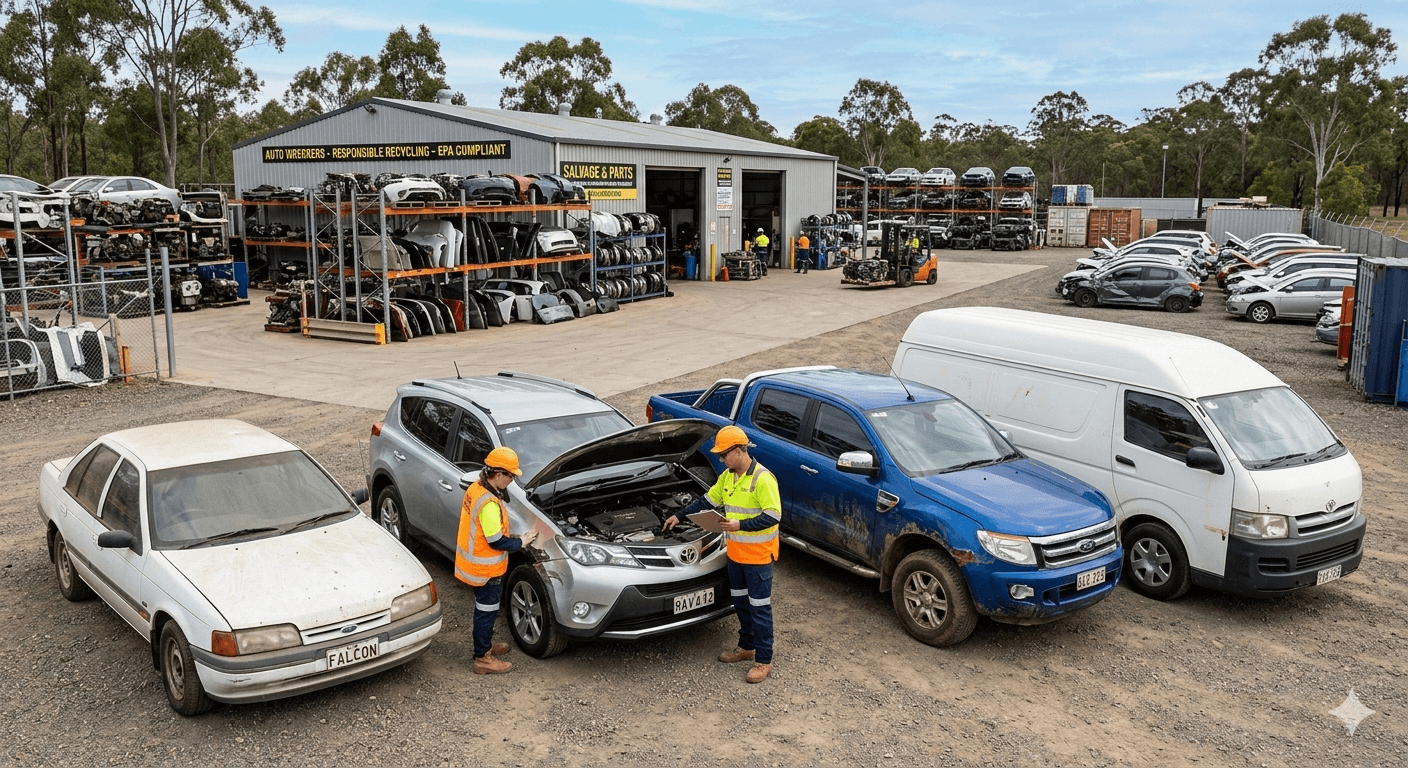
Cars Wreckers Brisbane buys vehicles in all conditions — oil burners, non-runners, damaged, written-off, and everything in between. We pay fair market value based on what your car is genuinely worth as a parts and scrap vehicle, and we collect it from your door for free.
- ✓Instant cash offer. Call us with your car’s details and we’ll give you a firm offer over the phone. No vague ranges, no inspection required before we give you a number.
- ✓Free same-day removal across Brisbane. We come to your home or wherever the car is. Oil-burning cars that don’t drive reliably? Not a problem — our tow truck handles it.
- ✓Eco-friendly disposal. Every vehicle we process is dismantled properly. Fluids are recovered and disposed of safely, metals are recycled, and usable parts go back into the Queensland used parts market. It’s the responsible way to dispose of an end-of-life vehicle.
- ✓All paperwork handled. Queensland Transport ownership transfer is processed correctly, so you’re not left with future liability for the vehicle.
Alt text: “Cars Wreckers Brisbane collecting an oil-burning car — instant cash, free towing, eco-friendly recycling Queensland”
📞 Get a Free Quote for Your Oil-Burning Car
Serving Brisbane, Ipswich, Logan, Gold Coast, and all of South East Queensland. Cash before we leave. Free towing. Always.
FAQs — Car Burning Oil in Australia
How much oil burning is actually normal?
+Most manufacturers define “acceptable” oil consumption as up to 1 litre per 1,000km, though this figure is often used to deflect warranty claims and is considered high by most mechanics. In practice, a healthy engine in good condition should use less than 200ml per 1,000km — ideally none at all between services. If you’re adding more than 500ml every 3,000km and there’s no visible leak, investigate the cause rather than just keep topping up.
Can I fix oil burning without rebuilding the engine?
+Sometimes, yes. If the cause is a faulty PCV valve, that’s a cheap fix. If it’s valve stem seal failure, a competent mechanic can often replace the seals without a full rebuild — it’s labour intensive but not necessarily engine-out work on many vehicles. However, if a compression test confirms worn piston rings, there’s no way around an engine rebuild or replacement to address the root cause. Oil-burning additives and high-mileage oils can slow consumption temporarily, but they don’t fix worn mechanical components.
Is it worth fixing an old car that burns oil in Australia?
+It depends entirely on the numbers. The key question is: what is the car worth after the repair, and what does the repair cost? If a $1,200 valve stem seal job brings a car that’s worth $7,000 back to full health, that makes sense. If a $5,000 engine rebuild is needed on a car worth $4,500 with a string of other issues, it doesn’t. Get a quote from a wrecker first — knowing what the car is worth in its current condition gives you a solid baseline for the decision.
Will burning oil cause a roadworthy fail in Queensland?
+It can. Queensland’s Safety Certificate inspection (roadworthy) includes an assessment of excessive exhaust emissions. Persistent blue or black exhaust smoke is grounds for a fail, as it indicates either oil burning or a fuel system problem. Beyond the emissions check, oil burning often leads to fouled spark plugs and catalytic converter damage that inspectors may also identify as defects. If your car is burning significant amounts of oil, don’t expect to get a roadworthy without addressing the underlying cause.
Can I sell a car that burns oil to a wrecker in Brisbane?
+Yes — and this is often the best financial outcome for older vehicles with significant oil burning. Cars Wreckers Brisbane buys oil-burning vehicles in any condition across Brisbane and South East Queensland. The car doesn’t need to be running, registered, or in any particular state. Call 1800 650 650 with your vehicle’s details for an instant, no-obligation cash offer.
Done with an Oil-Burning Car? We’ll Take It Off Your Hands
Instant cash. Free towing. Same-day service across Brisbane and South East Queensland. No repair needed. No roadworthy required.
Cars Wreckers Brisbane — Cash for Oil-Burning Cars QLD — carswreckers.com.au