
How to Protect Your Tyres from Overheating?
Key Takeaways
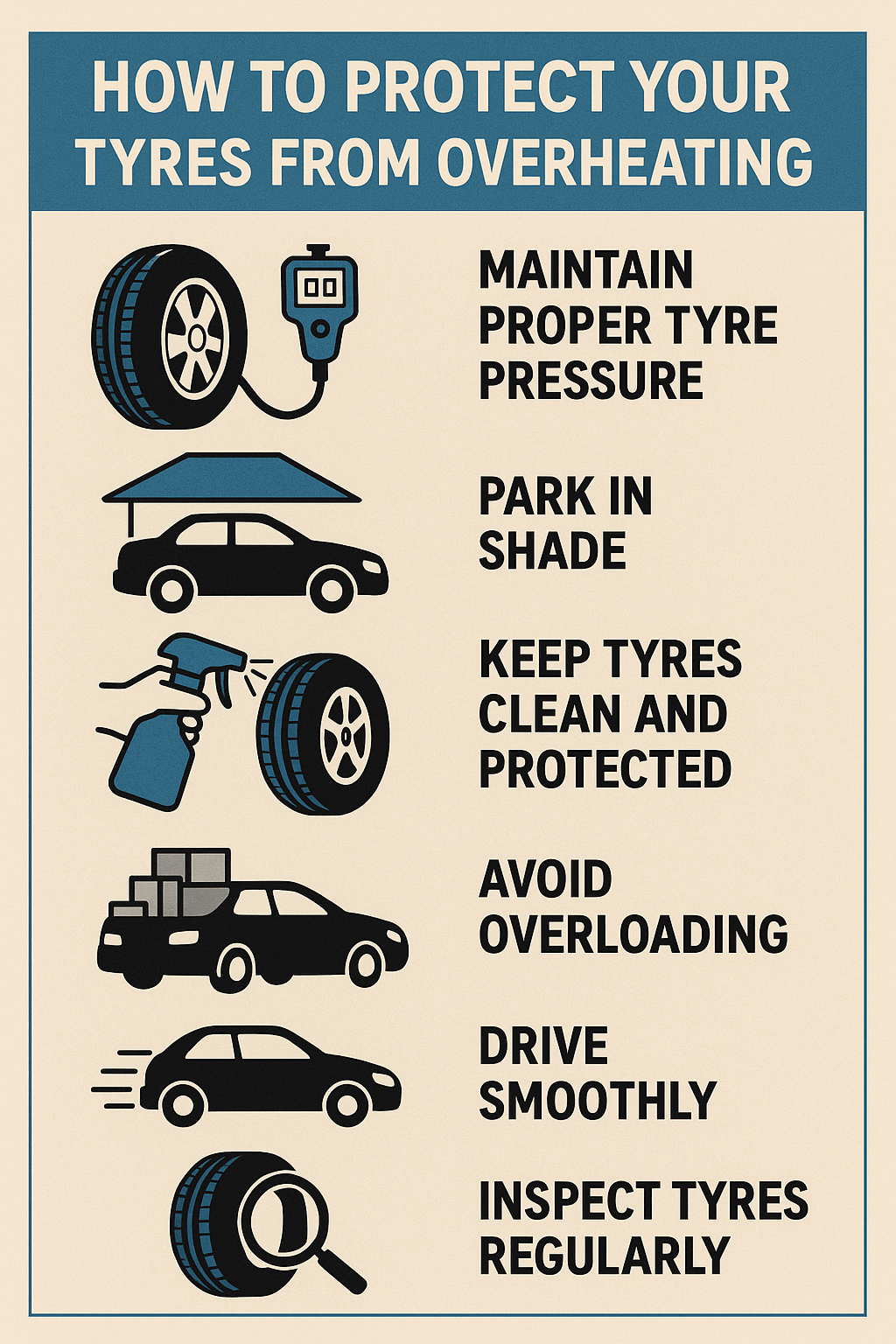
- Maintain correct tyre pressure to reduce friction and heat buildup
- Never overload your vehicle beyond its capacity
- Drive smoothly—avoid sudden acceleration or hard braking
- Keep tyres clean and apply protectant to prevent cracking
- Park in shade or use sunshades to block direct sunlight
- Inspect tyres regularly for cracks, bubbles, or hot‑spot signs
- Choose quality, heat‑resistant tyres designed for hot climates
Protect Your Tyres from Overheating?
Overheating tyres can lead to blowouts, reduced tyre life, and unsafe driving. In hot weather, the rubber and air inside your tyres get hotter, making the tyre weaker. By following a few simple steps, you can keep your tyres cooler, drive safer, and save money on replacements.
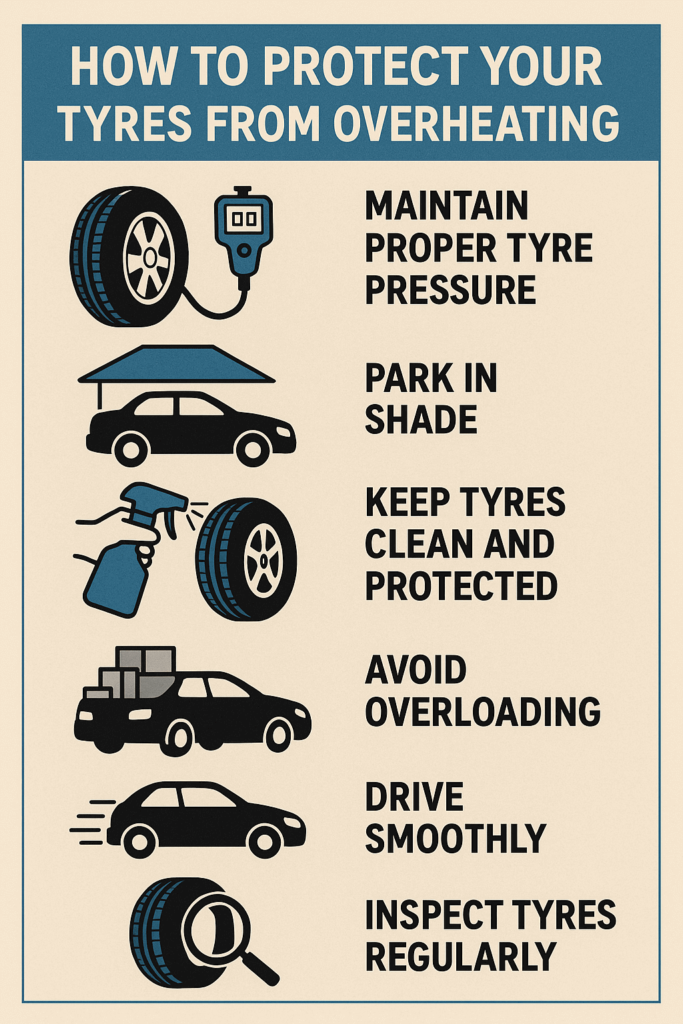
1. Maintain Proper Tyre Pressure
Keeping your tyres at the manufacturer’s recommended pressure is the single most effective way to prevent overheating. When tyres are under‑inflated, the sidewalls flex more, generating extra heat. When they’re over‑inflated, there’s less tyre surface touching the road, increasing friction and heat in the center of the tread.
- How to check: Use a reliable tyre gauge when tyres are cold (before driving).
- How often: At least once a week in hot weather.
- Tip from an expert: I once drove 200 km in desert heat—checking pressure every morning saved me from a blowout.
2. Avoid Overloading
Every vehicle has a maximum load capacity. Exceeding it forces tyres to carry more weight, which increases internal friction and heat.
- Find your limit: Check the door‑jamb sticker or owner’s manual.
- Spread the load: Distribute heavy items evenly in the trunk.
- Expert note: When I helped a friend move furniture, keeping boxes low prevented tyre stress—and we avoided roadside trouble.
3. Drive Smoothly
Fast starts, hard stops, and sharp turns make tyres work harder and heat up faster.
- Accelerate gently
- Brake gradually
- Maintain moderate speeds
By driving like this, you cut down on friction and keep tyre temperatures in check—especially important on long highway trips or in stop‑and‑go traffic.
4. Keep Tyres Clean and Protected
Dirt and grime can trap heat against the rubber. Cleaning your tyres and applying a protectant helps the rubber stay flexible and resist cracking.
- Wash: Use mild soap and water weekly.
- Protect: Apply a tyre‑safe dressing (look for “graphene” or “UV protectant”).
- Pro tip: A friend’s fleet used a foam protectant spray; it cut tyre cracks by 80% in summer.
5. Park in Shade
Sunlight can heat tyres even when your car isn’t moving.
- Shade: Look for covered parking or tree cover.
- Sunshade: Use windshield sunshades to lower cabin and tyre temperatures.
- Creative hack: I drape a light blanket over the dashboard—tyres stay noticeably cooler when I drive off.
6. Inspect Tyres Regularly
Spotting early signs of overheating can prevent bigger problems. After driving, carefully feel tyres (use gloves if hot). Look for:
- Cracks or splits in the rubber
- Bubbles or bulges on the sidewall
- Tread separation or unusual wear patterns
If you see any of these, let tyres cool before driving and have them checked by a professional.
7. Use Quality Tyres Designed for Heat
Some tyres are made with special compounds and treads that dissipate heat better. When shopping:
- Look for: Heat‑resistant ratings (Temperature A or B on the sidewall)
- Ask: A tyre expert about models built for hot climates
- Personal tip: I switched to a high‑temperature tyre on my summer commute—it runs 15 °C cooler than my old set.
Related Services
- Sell your old car easily: Sell Your Car in Brisbane
- Junk car removal: Junk Car Removal Services
- Find best wreckers at Coopers Plains: Best Car Wreckers Coopers Plains
- Wreckers near Forrestdale: Car Wreckers Forrestdale
- General car‑recycling info: Cars Wreckers Home
Frequently Asked Questions
A: Use a calibrated pressure gauge on cold tyres. Remove the valve cap, press the gauge firmly, read the number, and adjust with an air pump.
Q: What early signs show tyres are overheating?
A: Hot‑to‑touch sidewalls, visible cracks, bubbles, or unusual tread wear are key warning signs.
Q: Can tyre rotation help prevent overheating?
A: Yes. Rotating tyres evens out wear and heat distribution, helping all tyres last longer.
Q: Which tyre brands perform best in extreme heat?
A: Look for brands with a Temperature A rating—these include many premium and heat‑rated models from Bridgestone, Michelin, and Pirelli.
Q: What should I do if I notice underinflated tyres on a hot day?
A: Stop safely, let tyres cool, then inflate to the recommended PSI. Driving on underinflated hot tyres risks a blowout.
By following these expert‑backed steps—checking pressure, avoiding overload, driving gently, protecting and inspecting your tyres, parking wisely, and choosing heat‑rated tyres—you’ll keep your tyres cooler, safer, and longer‑lasting, even in scorching weather!
Our Latest Blog
-
 What Types of Vehicles Can Be Disposed Of?
-
 How Can I Get a Quote for My Old Vehicle in Australia?
-
 Can I Choose Where My Car Is Taken for Disposal in Australia?
-
 What Should I Do With My Car Title When Disposing of My Vehicle in Australia?
-
 How Do I Check the Reputation of a Car Disposal Company in Australia?
-
 Are There Incentives for Recycling Your Car in Australia?