
What Documentation Do I Need for Car Disposal? A Complete Guide
Getting rid of an old car involves more than just handing over the keys. Whether you’re scrapping, selling, or donating your vehicle, having the right paperwork protects you legally and financially. This guide walks you through exactly what documents you’ll need and how to handle common complications.
Essential Documents for Car Disposal
The documentation required depends on how you’re disposing of your vehicle, but certain papers are nearly universal across all disposal methods.
The Vehicle Title (Certificate of Ownership)
Your car’s title is the single most important document for disposal. This certificate proves you legally own the vehicle and have the right to transfer or scrap it.
What you need to know:
- The title must show you as the current owner
- Any liens must be satisfied and released before disposal
- You’ll typically sign the title over to the new owner, junkyard, or donation organization
- Most jurisdictions require the buyer’s signature as well to complete the transfer
If your title lists a lienholder (a bank or finance company), you’ll need a lien release document showing the loan is paid off. Contact your lender directly to obtain this—most can provide it within a few business days.
Government-Issued Photo ID
You’ll need to verify your identity during the disposal process. Acceptable forms include:
- Driver’s license
- State or national ID card
- Passport
- Military ID
The name on your ID must match the name on the vehicle title. If they don’t match due to marriage, divorce, or legal name change, bring supporting documentation like a marriage certificate or court order.
Vehicle Registration
While not always mandatory for disposal, your current or most recent registration serves as additional proof of ownership and helps verify vehicle details like the VIN (Vehicle Identification Number).
Keep in mind that in some regions, you may be eligible for a registration refund if you dispose of the vehicle before your registration expires. Check with your local motor vehicle department.
Bill of Sale
A bill of sale creates a legal record of the transaction. While some disposal methods don’t require one, it’s smart to create this document for your protection.
A complete bill of sale should include:
- Date of sale
- Your full name and address (seller)
- Buyer’s full name and address
- Vehicle details (year, make, model, VIN, mileage)
- Sale price (even if $0 for scrap)
- “As-is” condition statement
- Both parties’ signatures
Many motor vehicle departments provide free bill of sale templates on their websites. Using an official form ensures you include all legally required information.
Documentation by Disposal Method
Different disposal routes require different paperwork. Here’s what you need for each scenario.
Scrapping Your Car at a Junkyard
Junkyards and auto recyclers typically require:
Required documents:
- Signed vehicle title transferring ownership to the junkyard
- Valid photo ID
- Vehicle registration (in most areas)
Optional but recommended:
- Bill of sale showing the scrap value paid
- Receipt from the junkyard for your records
- License plate removal confirmation (you may need to return plates to authorities)
After accepting your vehicle, reputable scrap yards should provide you with a Certificate of Destruction or similar document. This official record confirms the vehicle has been dismantled and will never return to the road. Keep this certificate—it protects you if someone later tries to register the vehicle or commits crimes using its VIN.
Selling to a Private Buyer or Car Buying Service
Private sales and car buying services (like Carvana, CarMax, or local “we buy cars” companies) need more comprehensive documentation:
Required documents:
- Clean vehicle title signed over to buyer
- Government-issued ID
- Bill of sale
- Current registration
- Maintenance records (if available, increases value)
Additional paperwork to consider:
- Odometer disclosure statement (legally required in many jurisdictions for vehicles under 10 years old)
- Smog or emissions test certificate (if your area requires it for sale)
- Vehicle history report (helps justify your asking price)
- Owner’s manual and service booklets
Donating Your Vehicle to Charity
Charitable donations involve unique tax implications, so documentation is crucial.
Required documents:
- Vehicle title signed over to the charity
- Photo ID
- Donation receipt from the organization
For tax purposes, also obtain:
- IRS Form 1098-C (if the charity sells your car for more than $500)
- Written acknowledgment from the charity stating the donation date and describing the vehicle
- Fair market value assessment if you’re claiming a deduction over $5,000
Important: Only donate to IRS-recognized 501(c)(3) organizations if you want a tax deduction. Verify their status before completing the transfer. The charity should handle vehicle pickup and DMV notification, but confirm these details in writing.
Disposing of an Abandoned or Inherited Vehicle
These situations require additional legal steps.
For inherited vehicles:
- Death certificate
- Will or probate court documents naming you as the vehicle’s recipient
- Executor’s authorization (if applicable)
- Standard title transfer documents once you’ve established legal ownership
Many jurisdictions have a specific “transfer on death” or “inheritance transfer” form. Contact your local motor vehicle department to learn the exact process—trying to shortcut this can create serious legal problems.
For abandoned vehicles on your property:
- Police report or official abandoned vehicle report
- Proof of attempts to contact the owner
- Court order or administrative hearing decision granting you ownership (requirements vary significantly by location)
Never attempt to scrap an abandoned vehicle without proper legal authority. This can result in theft charges, even if the car has been sitting on your property for months.
Handling Common Documentation Problems
Real-world car disposal rarely goes perfectly smoothly. Here’s how to handle the most common documentation issues.
Lost or Missing Title
A missing title is one of the most common obstacles to car disposal. Here’s your solution:
Steps to obtain a duplicate title:
- Contact your local DMV or motor vehicle department
- Complete a duplicate title application (often available online)
- Provide your ID and vehicle information (VIN, license plate number)
- Pay the duplicate title fee (typically $10-$75 depending on location)
- Wait for processing (usually 1-4 weeks, though expedited options may be available)
Can you dispose of a car without a title? Sometimes, but it’s complicated and location-dependent. Some junkyards will accept vehicles without titles if:
- The vehicle is over a certain age (often 15+ years)
- You provide extensive alternative documentation
- The scrap value is below a specified threshold
However, selling a car without a title to a private buyer is illegal in most places and opens you to liability if the vehicle is later used in a crime.
Title in Someone Else’s Name
If you bought a car but never transferred the title to your name, you’re in a legally gray area. The proper approach:
- Contact the person whose name is on the title
- Have them sign the title over to you
- Complete the title transfer with your motor vehicle department
- Once the new title arrives in your name, proceed with disposal
If you cannot locate the titled owner, you may need to go through your jurisdiction’s abandoned vehicle or bonded title process. This involves posting public notices, waiting periods, and potentially obtaining a court order.
Damaged or Illegible Title
If your title is torn, water-damaged, or otherwise unreadable, request a duplicate title before attempting disposal. A damaged title may not be legally acceptable for transfer.
Outstanding Parking Tickets or Violations
Some jurisdictions won’t process a vehicle disposal until all associated fines are paid. Check your local rules and settle any outstanding violations before starting the disposal process.
Release of Liability: Protecting Yourself After Disposal
One of the most overlooked yet critical steps in car disposal is filing a Release of Liability form with your motor vehicle department.
This document officially notifies the government that you no longer own the vehicle. Without it, you could be held responsible for:
- Parking tickets issued after you sold the car
- Toll violations
- Involvement in crimes
- Accidents
- Abandoned vehicle fees
How to file: Most motor vehicle departments accept release of liability forms online, by mail, or in person. You’ll need:
- Vehicle information (VIN, license plate, make, model)
- Disposal date
- Buyer’s information (if applicable)
- Your signature
File this form immediately after disposal—the same day if possible. Don’t assume the buyer will handle the title transfer. Protecting yourself is your responsibility.
State and Regional Variations
Vehicle disposal requirements vary significantly by location. While this guide covers generally applicable procedures, always verify specific requirements with your local authorities.
Key areas where requirements differ:
- Whether emissions testing is required before disposal
- How long you have to notify authorities after disposal
- Whether you must return license plates or can transfer them
- Title requirements for older vehicles
- Proof of insurance cancellation
- Sales tax implications
Where to find location-specific information:
- Your state’s Department of Motor Vehicles (DMV) website
- Local vehicle licensing office
- Auto recyclers association in your region
- Municipal government websites for local ordinances
International readers should consult their national or regional vehicle authority, as requirements outside the United States follow different systems entirely.
Red Flags: Avoiding Scams and Illegal Disposal
Protect yourself by recognizing warning signs of illegitimate disposal operations.
Never work with buyers or scrap yards who:
- Offer to handle the car without any paperwork
- Tell you “don’t worry about the title”
- Refuse to provide a receipt or certificate of destruction
- Pay significantly more than fair market value without explanation
- Pressure you to sign blank documents
- Ask you to leave the title blank (called “title jumping” and it’s illegal)
Environmental violations to avoid: Dumping a vehicle on public or private land is illegal and carries severe penalties including:
- Heavy fines (often $1,000-$10,000+)
- Criminal charges
- Environmental cleanup liability
- Civil lawsuits from property owners
Always use licensed disposal facilities. Legitimate operations will happily provide their licensing information and proper documentation.
Step-by-Step Car Disposal Checklist
Follow this process to ensure a smooth, legal disposal:
Before Disposal:
- Locate your vehicle title (or order a duplicate if missing)
- Verify no liens exist or obtain lien release
- Gather vehicle registration and your photo ID
- Remove license plates (if required in your area)
- Clear personal belongings from the vehicle
- Cancel auto insurance (but wait until after disposal is complete)
- Research disposal options and choose a reputable facility
During Disposal:
- Complete and sign title transfer
- Fill out bill of sale with all required information
- Get all signatures from buyer/facility
- Obtain certificate of destruction or receipt
- Collect payment (if applicable)
- Photograph all signed documents for your records
After Disposal:
- File release of liability with motor vehicle department
- Submit license plate return (if required)
- Request registration refund (if eligible)
- Cancel insurance and request refund for unused coverage
- Keep all paperwork for at least 3-5 years
- Verify the title transfer was processed (check online after 2-3 weeks)
Frequently Asked Questions
Can I dispose of a car without a title?
In most cases, no. The title proves ownership and is legally required to transfer a vehicle. However, some jurisdictions allow title-exempt disposal for very old vehicles (typically 15+ years) through licensed scrap yards. You’ll need extensive alternative documentation like old registration, bills of sale, and identification. Always obtain a duplicate title when possible—it’s the cleanest, safest approach.
What if the car is in two names?
If the title shows “and” between names, both owners must sign. If it shows “or,” either owner can complete the disposal alone. If one owner is deceased, you’ll need a death certificate and may need probate documents.
Do I need a smog check to scrap my car?
Requirements vary by location. Many areas that require emissions testing for registration renewal waive this requirement for vehicles being scrapped. However, if you’re selling to a private party who will continue driving it, emissions testing is typically mandatory.
How long does it take to get a duplicate title?
Processing times range from 3 days to 6 weeks depending on your location and whether you pay for expedited service. Plan ahead—don’t wait until you’ve already agreed to dispose of your vehicle.
What happens if I don’t file a release of liability?
You remain the legal owner on record and can be held responsible for violations, tickets, and accidents involving the vehicle. File this form immediately upon disposal to protect yourself.
Can I dispose of a financed car?
Only if you’ve paid off the loan and obtained a lien release from your lender. If you still owe money, you must either pay off the balance or negotiate with your lender about the disposal process.
What should I do with my license plates?
This varies by jurisdiction. Some areas require you to remove and return plates to the motor vehicle department. Others allow you to keep them or transfer them to a new vehicle. Check your local requirements.
Is a bill of sale required even when scrapping?
While not always legally required for scrap, creating a bill of sale protects you by documenting the transaction, disposal date, and “as-is” condition. It takes five minutes and could save you from future liability claims.
Final Thoughts
Proper documentation is your best protection when disposing of a vehicle. While the process may seem bureaucratic, each form serves a purpose: proving ownership, transferring liability, and creating a legal record of the transaction.
The key is being thorough. Cutting corners on paperwork can lead to ongoing liability, fines, or legal complications that far outweigh the inconvenience of gathering a few documents.
When in doubt, over-document rather than under-document. Keep copies of everything, file your release of liability the same day you dispose of the vehicle, and verify that the title transfer was processed a few weeks later.
Our Latest Blog
-
 What Types of Vehicles Can Be Disposed Of?
-
 How Can I Get a Quote for My Old Vehicle in Australia?
-
 Can I Choose Where My Car Is Taken for Disposal in Australia?
-
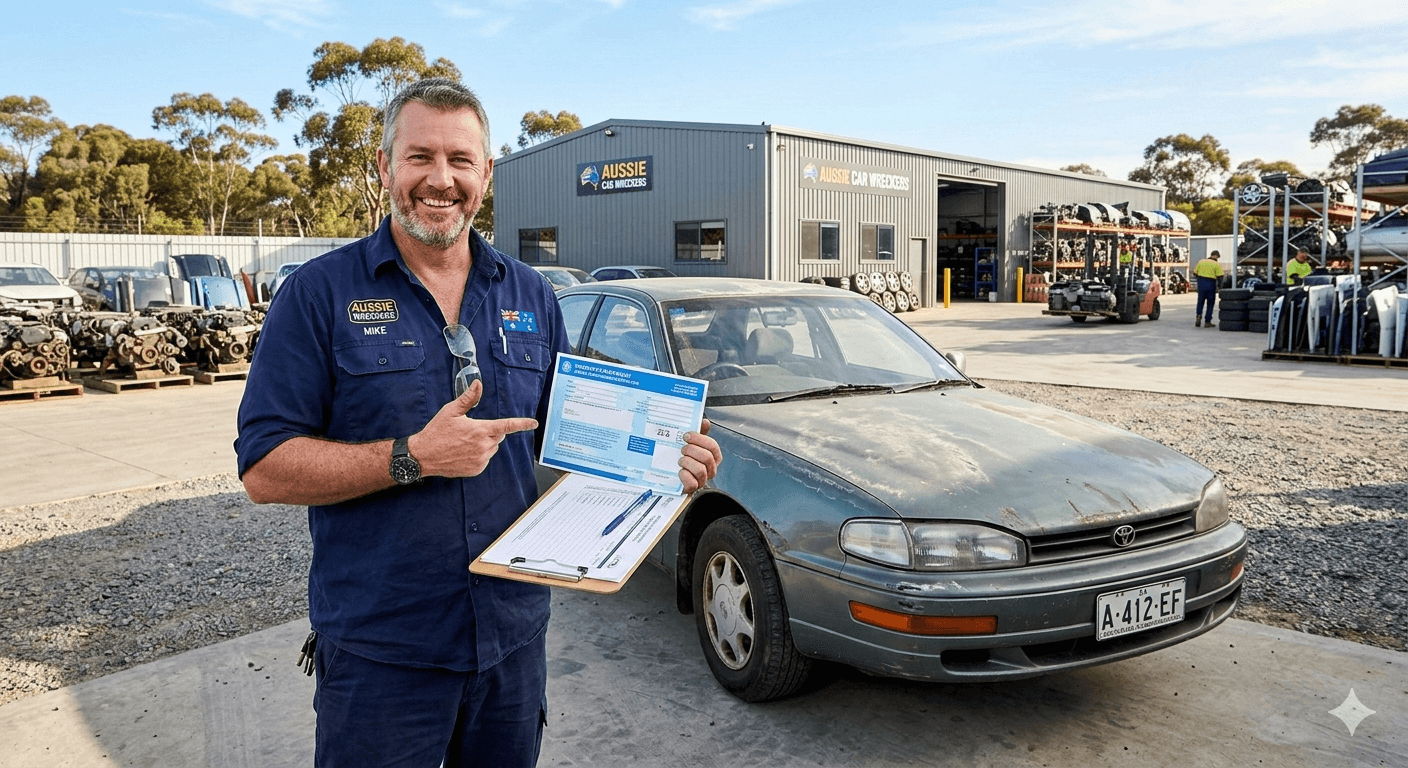 What Should I Do With My Car Title When Disposing of My Vehicle in Australia?
-
 How Do I Check the Reputation of a Car Disposal Company in Australia?
-
 Are There Incentives for Recycling Your Car in Australia?