
What Should I Do With My Junk Car? Best Options Explained
If you’ve got an old car sitting in your driveway that won’t start, costs more to fix than it’s worth, or is simply taking up space, you’re probably wondering what to do with it. The good news is you have several options—and most of them can put cash in your pocket while getting that eyesore off your property.
This guide walks through every realistic option for dealing with a junk car, from selling it for cash to donating it for a tax break. We’ll cover what each option involves, how much money you can expect, and what paperwork you’ll need. By the end, you’ll know exactly which route makes the most sense for your situation.
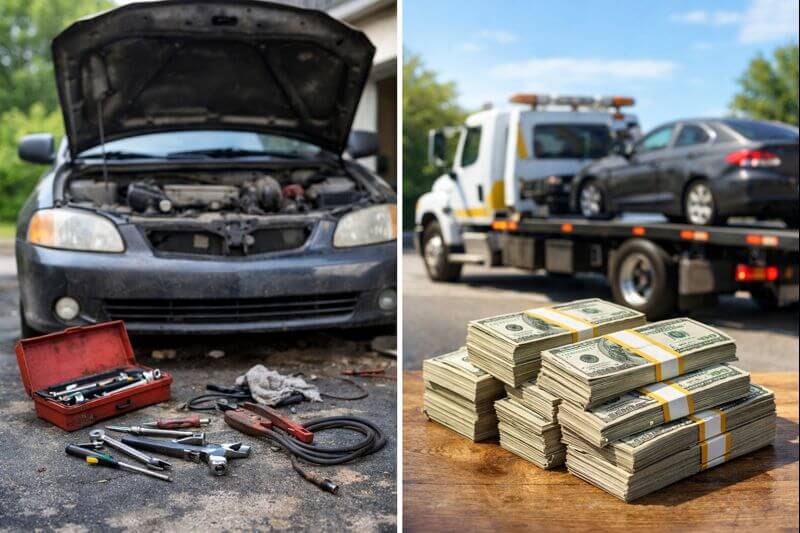
What Is Considered a Junk Car?
A junk car is any vehicle that’s no longer practical or economical to keep on the road. This includes:
- Non-running vehicles that won’t start or can’t be driven safely
- Accident-damaged cars with frame damage or totaled by insurance
- High-mileage vehicles where repair costs exceed the car’s value
- Rust buckets with severe corrosion affecting structural integrity
- Mechanically failed cars with blown engines, bad transmissions, or multiple failing systems
- Abandoned vehicles that have been sitting unused for months or years
You don’t need a completely worthless car for it to qualify as “junk.” Even if it runs, a 20-year-old sedan with a cracked head gasket and 200,000 miles might be worth more as scrap than as a running vehicle.
Your Best Options for Getting Rid of a Junk Car
Let’s break down each option realistically, including what you can expect to make and how much effort is involved.
Sell Your Junk Car for Cash
This is the most popular option for good reason—it’s fast, convenient, and puts money in your hand quickly.
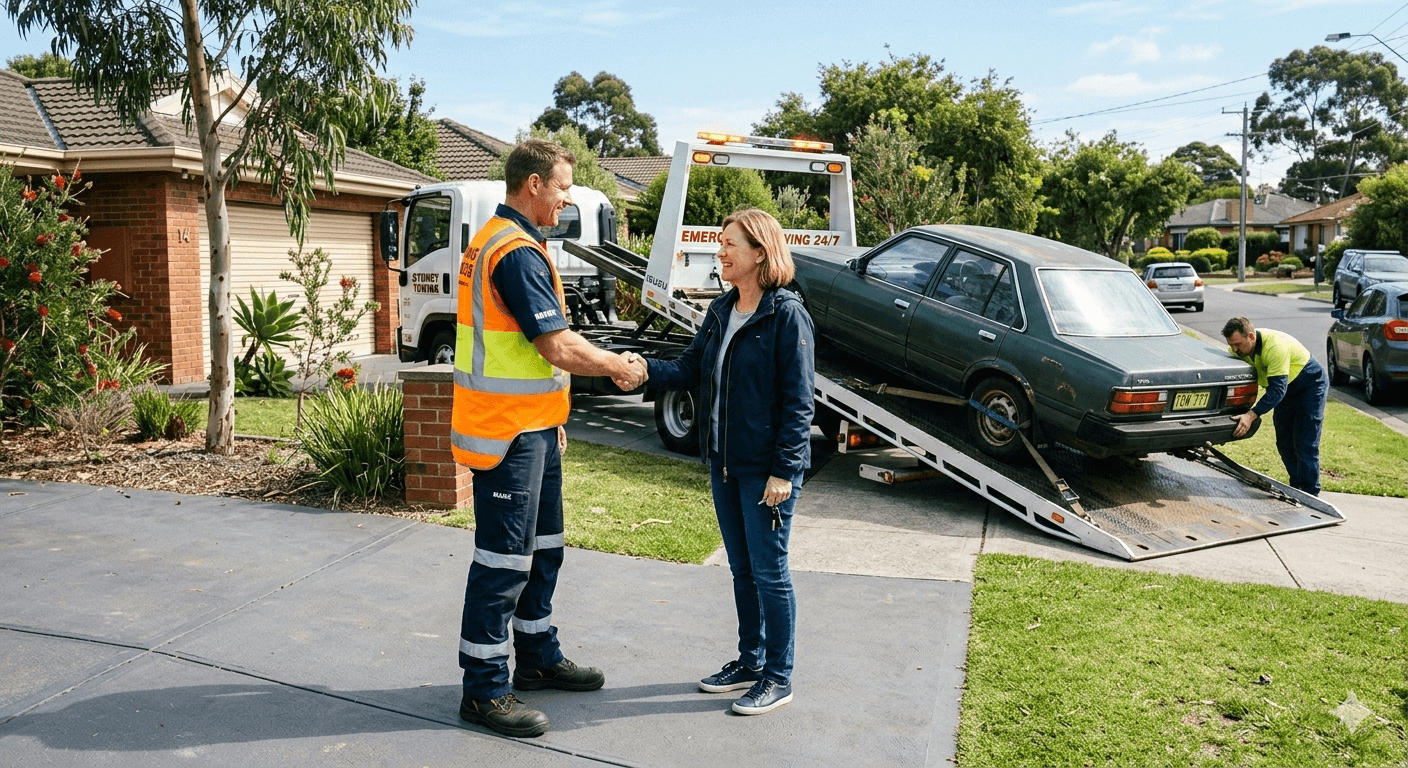
How it works: Junk car buyers (also called auto recyclers or salvage yards) purchase your vehicle for its scrap metal value and usable parts. Many offer free towing and same-day pickup. You get a quote based on your car’s make, model, year, condition, and current scrap metal prices.
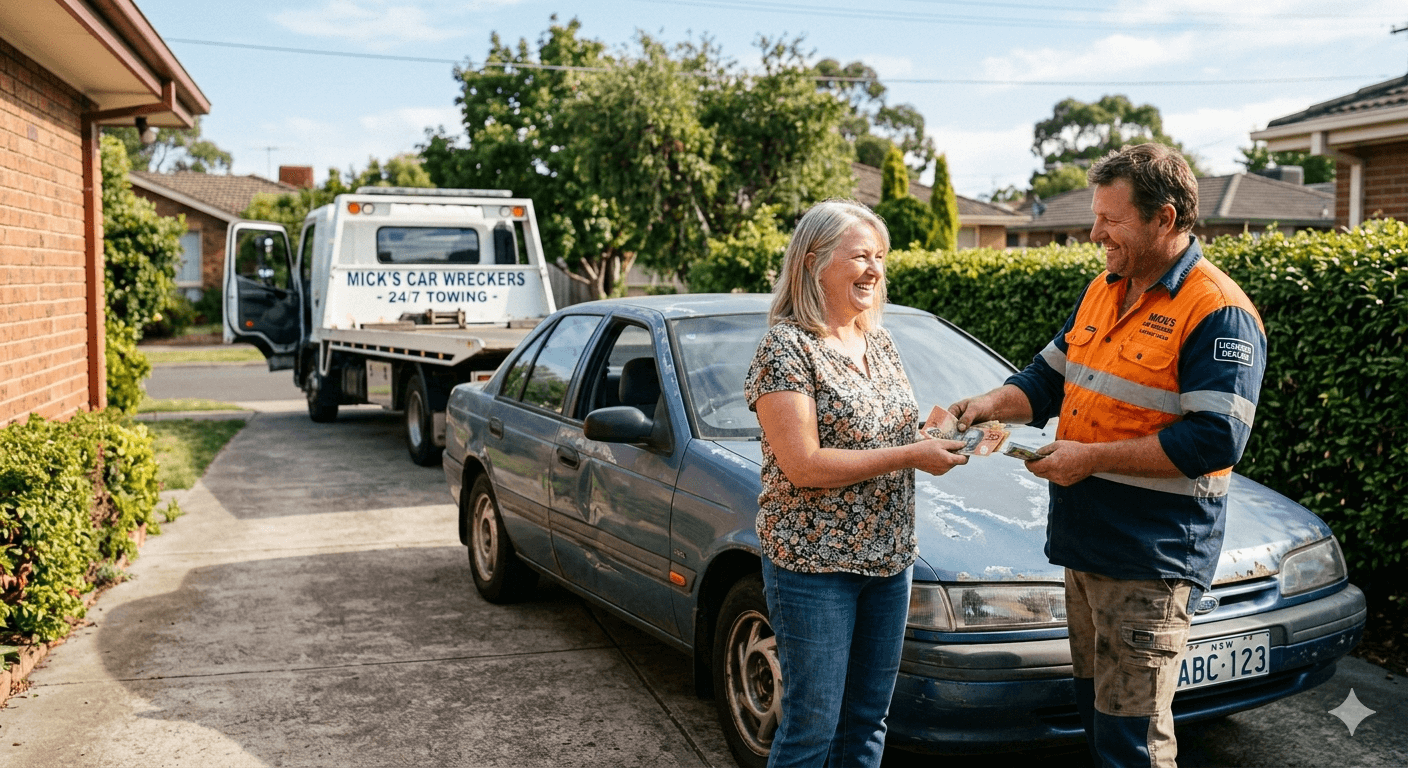
What you can expect to make: Most junk cars sell for $150 to $600, though the amount varies widely. A heavy truck or SUV with valuable parts might fetch $800 or more, while a small sedan with rust damage might bring $200.
Pros:
- Quick cash payment, often same-day
- Free towing in most cases
- Minimal paperwork
- No need to deal with private buyers
- Removes liability from your property
Cons:
- You might get less than selling parts individually
- Scrap prices fluctuate with metal markets
- Some buyers lowball or change prices at pickup
Best for: Anyone who wants the fastest, easiest way to get rid of a junk car and get paid for it.
Pro tip: Get quotes from at least three buyers. Offers can vary by $100 or more for the same vehicle. Licensed auto recyclers typically offer better prices than general scrap yards.
Scrap or Recycle the Vehicle
Scrapping and selling for cash are essentially the same thing, but it’s worth understanding what actually happens to your car.
When you scrap a vehicle, it goes to an auto recycler who removes hazardous fluids (oil, antifreeze, brake fluid), pulls out valuable parts for resale, and crushes the remaining shell. The metal gets shredded and sold to steel mills where it’s melted down and turned into new products.
Environmental impact: Recycling one car keeps about 2,000 pounds of steel out of landfills and conserves the raw materials and energy needed to mine new ore. Auto recycling is actually one of the most effective recycling industries in the country—about 86% of a vehicle’s materials get reused.
What affects scrap value:
- Weight: Heavier vehicles contain more metal
- Metal prices: Steel and aluminum prices change daily based on commodity markets
- Condition: A complete car is worth more than one missing parts
- Location: Transportation costs affect what buyers will pay in rural areas
Donate Your Junk Car
If your car is worth less than $500 in scrap value and you itemize deductions on your taxes, donating might make financial sense.
How it works: You sign over your title to a registered charity. They either use the vehicle, sell it at auction, or scrap it themselves. You receive a tax deduction receipt.
Tax deduction reality check: You can only deduct what the charity actually gets for the car, not the “fair market value” unless it’s used directly for charitable purposes. Most junk cars sold at charity auctions bring $300 to $500, which translates to a tax savings of only $75 to $125 for someone in the 25% tax bracket.
Pros:
- Supports a cause you care about
- Usually includes free towing
- Potentially easier than dealing with a buyer
Cons:
- Tax benefit is often less than selling for cash
- Only valuable if you itemize deductions (most people take the standard deduction now)
- Processing can take weeks
- Some “charity” programs are mostly for-profit
Best for: Someone who wants to support a specific charity and won’t get much cash value from selling, or someone who doesn’t need the money.
Warning: Use established charities like Habitat for Humanity, Goodwill, or your local NPR station. Research any charity vehicle program before donating—some keep 70-80% of proceeds as “administrative costs.”
Sell Usable Parts Individually
If you’re handy with tools, have storage space, and don’t mind spending time, parting out a junk car can be the most profitable option.
What you can expect to make: Depending on the vehicle, you might make $800 to $2,000+ by selling valuable components like:
- Engine and transmission ($200-$800 each for working units)
- Catalytic converter ($50-$300 depending on type)
- Wheels and tires ($100-$400 per set)
- Electronics and infotainment systems ($50-$200)
- Body panels, doors, hoods ($50-$150 each)
- Seats and interior parts ($50-$200)
Pros:
- Highest potential profit
- Helps other car owners find affordable parts
- You control the timeline
Cons:
- Extremely time-consuming (can take months)
- Requires tools and mechanical knowledge
- Need space to store the vehicle and parts
- Must deal with individual buyers
- Leftover shell still needs disposal
- May violate local ordinances about inoperable vehicles
Best for: Car enthusiasts or mechanics with time, space, and knowledge who own a desirable vehicle with parts in demand.
Reality check: This only makes sense for certain vehicles. A 2010 Honda Accord with a good engine? Worth parting out. A rusted 2004 minivan with high miles? Not worth your time.
Trade It In or Sell Privately
For cars that still run, even poorly, you might get more value through traditional sales channels.
Trade-in: Dealerships often accept junk cars as trade-ins toward a new purchase. The advantage is convenience and potentially reducing sales tax on your new car purchase. The disadvantage is dealers typically offer below-market value for junk vehicles—sometimes just $100 to $500 above scrap value.
Private sale: Selling to an individual through Craigslist, Facebook Marketplace, or local classifieds works if your car still drives. Be honest about issues in your listing. Price it below market value for a quick sale.
Best for:
- Trade-in: Anyone buying a new car who values convenience
- Private sale: Cars with life left in them that just need work
When it doesn’t work: If your car doesn’t run, has major mechanical issues, or would cost more than $1,000 to make roadworthy, forget private sale. Few individuals want to buy someone else’s problem, and the time investment rarely pays off.
How Much Is a Junk Car Worth?
The honest answer is: it depends. But here’s what actually determines junk car value.
Scrap metal weight: Steel is the baseline. A typical car weighs 3,000 to 4,000 pounds, but only about 65-75% is steel and iron. At current scrap prices of $150 to $250 per ton, that’s roughly $225 to $450 in raw metal value.
Usable parts: This is where value jumps. A junk car with a working engine, transmission, or catalytic converter is worth significantly more than pure scrap. Buyers can resell these parts for profit, so they’ll pay you more upfront.
Make and model: Some vehicles have higher demand for parts. A Honda Civic, Toyota Camry, or Ford F-150 will fetch more than an obscure import with few parts buyers. Luxury cars can be valuable for parts but complicated to dismantle.
Condition beyond “junk”: Even among junk cars, there are degrees. A complete car with all parts present is worth more than one that’s been stripped. Surface rust is fine, but structural rust reduces value.
Your location: Urban areas near auto recyclers get better prices because towing costs are lower. Rural areas might see lower offers due to transportation expenses.
Aluminum content: Vehicles with aluminum engines, hoods, or body panels (like some Audi, Jaguar, or Ford F-150 models) are worth more since aluminum scrap pays better than steel.
Current commodity prices: Scrap metal prices fluctuate. Check current prices in your area before selling—waiting a few months during a market dip might cost you $50 to $100.
Realistic price ranges by vehicle type:
- Compact cars: $200-$400
- Midsize sedans: $250-$500
- Full-size sedans/SUVs: $300-$600
- Trucks: $350-$800
- Luxury vehicles: $300-$700 (high variation based on parts)
What You Need Before Selling or Scrapping
Different states have different requirements, but here’s what you’ll typically need:
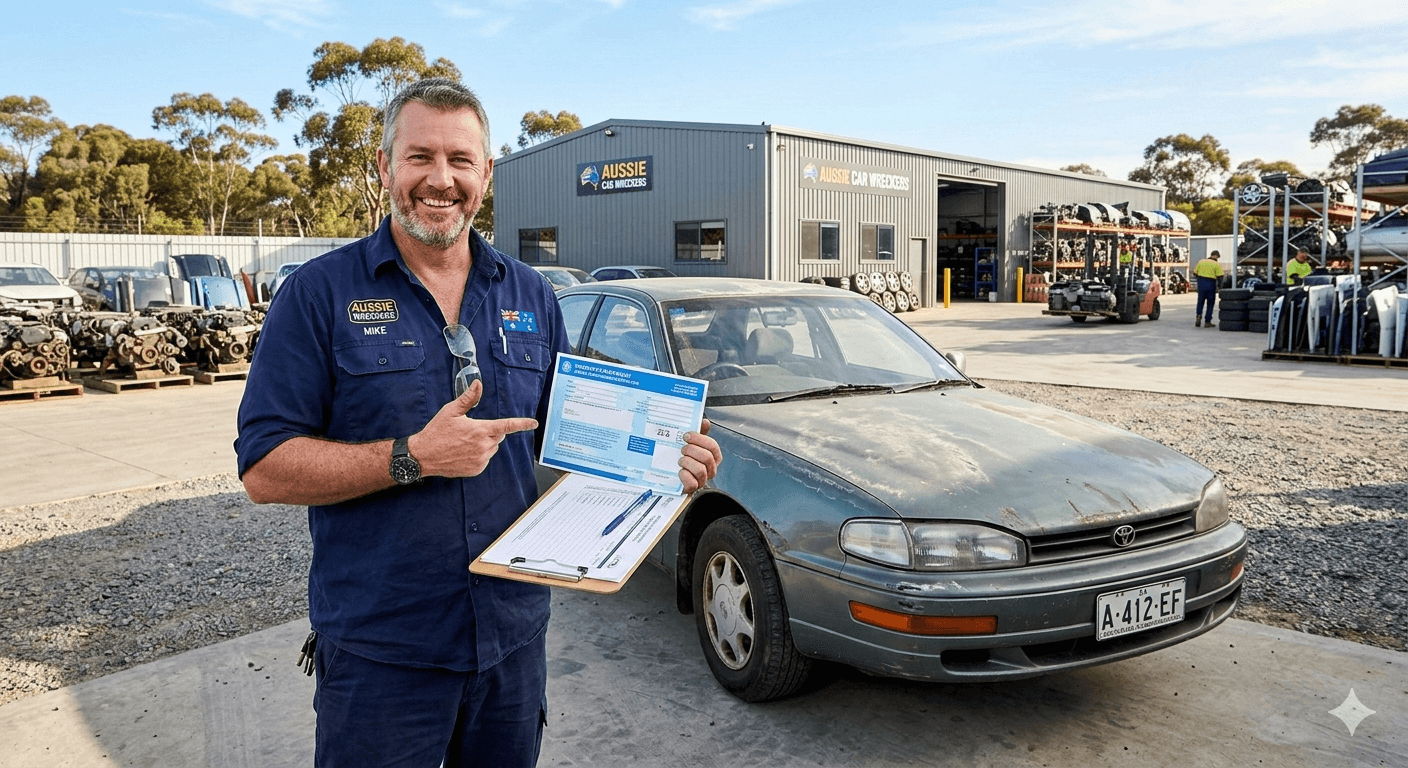
Vehicle title: This is the most important document. The title proves you own the car and have the right to sell it. Most buyers won’t purchase a vehicle without a clean title. If you’ve lost it, you can apply for a duplicate title through your state’s DMV—this usually costs $10 to $30 and takes 1-3 weeks.
Valid photo ID: Buyers need to verify you’re the person named on the title. A driver’s license or state ID works.
Registration (sometimes): Some states or buyers require current or expired registration to prove the VIN matches.
Keys: Not always required for junk cars, but having them can increase value slightly if the car has usable parts.
License plates: Most states require you to remove plates before selling. Some states require you to return them to the DMV; others let you keep or transfer them.
Lien release: If you still owe money on the car, you’ll need to pay off the loan and get a lien release before you can sell it. Most junk cars are old enough that this isn’t an issue.
What if you don’t have the title? Your options are limited but not zero. Some buyers purchase title-less vehicles for parts only at heavily reduced prices. Some states allow a bonded title or mechanic’s lien process, but these take time and money. For most people, getting a duplicate title is the best path forward.
Selling without a title: Only consider this as a last resort. Prices drop 30-50% without title, and some buyers who accept no-title cars are less reputable. Vermont and a few other states have alternative processes, but they’re complicated.
Common Junk Car Scams to Avoid
Not all junk car buyers operate honestly. Watch out for these red flags:
The lowball switcheroo: You get a quote for $500 over the phone. The tow truck arrives and the driver claims the car is in worse condition than described, dropping the offer to $250. You’re put on the spot with a truck already there. Avoid this: Get quotes in writing via email or text. Give accurate descriptions upfront. If the price drops at pickup without justification, tell them to leave.
No-show buyers: Someone makes an appointment, you wait around, and they never arrive or respond. Avoid this: Work with established companies with reviews, not random individuals.
Hidden fees: The quote is $400, but they deduct $100 for towing, $50 for “paperwork,” and $25 for “pickup fee,” leaving you with $225. Avoid this: Ask upfront if the quote includes free towing and if there are any fees whatsoever.
Fake charity scams: Organizations pose as charities but pocket most of the money. Avoid this: Verify the charity’s 501(c)(3) status through the IRS website or Charity Navigator. Ask what percentage goes to the actual cause.
Title jumping: A buyer asks you to sign the title but leave the buyer’s name blank so they can avoid transfer taxes. This is illegal in all states and leaves you liable if the car is later involved in a crime or abandoned. Avoid this: Never sign a blank title. Complete the entire transfer section yourself.
Unlicensed buyers: Operating without proper recycling licenses or dealer permits. Avoid this: Ask for their business license or recycler certification number. Check with your state’s environmental or motor vehicle agency if needed.
Payment issues: Promises to mail a check that never arrives, or paying with a sketchy third-party check. Avoid this: Get cash or a cashier’s check at time of pickup. Verify electronic payments clear before releasing the title.
Environmental Benefits of Recycling Junk Cars
Getting rid of a junk car isn’t just good for your wallet and property—it’s genuinely good for the environment when done right.
Materials recycling: A typical vehicle is about 65% iron and steel, 10% aluminum, 5% plastic, 5% rubber, and 15% other materials including glass, copper, and fluids. Nearly all of this can be recycled. The auto recycling industry reuses about 86% of vehicle materials, making it one of the most effective recycling sectors.
Energy conservation: Recycling steel uses 74% less energy than producing new steel from iron ore. Recycling aluminum saves even more—about 95% less energy than creating new aluminum. When millions of vehicles are recycled annually, these energy savings add up significantly.
Pollution prevention: Junk cars leak hazardous fluids. A single vehicle can contain:
- 5-10 quarts of motor oil
- 2-3 gallons of antifreeze
- Brake fluid, transmission fluid, and power steering fluid
- Battery acid
- Refrigerants from air conditioning
When properly recycled, these fluids are drained and either disposed of safely or recycled themselves. Motor oil can be re-refined into new oil. Antifreeze can be cleaned and reused. Lead-acid batteries are nearly 100% recyclable.
Landfill reduction: Keeping two tons of steel, plastic, and rubber out of landfills preserves space and prevents soil and groundwater contamination.
Supporting circular economy: Parts removed from your junk car give other vehicles longer life. A good used transmission might keep another car running for years, preventing the need to manufacture a new vehicle.
Choosing green buyers: Ask potential buyers how they handle fluids and whether they’re certified by environmental agencies. Legitimate auto recyclers follow EPA guidelines and state environmental regulations.
What’s the Best Option for You? (Decision Guide)
Here’s how to decide based on your specific situation:
Choose “sell for cash” if:
- You want money quickly
- You don’t have time or tools for parting out
- The car doesn’t run or would cost more to fix than it’s worth
- You need to clear space on your property
- You want minimal hassle
Choose “donate” if:
- You strongly support a specific charity
- The car is worth under $500 in scrap value
- You itemize tax deductions
- You don’t need the cash
- You’ve verified the charity is legitimate and efficient
Choose “part out” if:
- You own a desirable vehicle with valuable components
- You have mechanical skills and tools
- You have space to store the car and parts
- You have time (expect 2-6 months to sell everything)
- You can legally keep an inoperable vehicle on your property
Choose “trade-in” if:
- You’re buying a new car anyway
- The convenience is worth more than maximizing value
- The dealer offers a reasonable amount
- The car still runs and drives
Choose “private sale” if:
- The car runs and drives safely
- It needs work but is worth more than scrap
- You’re willing to meet potential buyers and negotiate
- You’re honest about issues and price it fairly
For most people in most situations, selling to a reputable junk car buyer offers the best combination of speed, convenience, and value. You get cash, the car disappears, and you’re done.
FAQs
Can I junk a car without a title?
It’s possible but difficult and less profitable. Some buyers will purchase for parts-only without title, but they’ll pay 30-50% less. Your best option is getting a duplicate title from your DMV, which usually takes 1-3 weeks and costs $10-$30.
Do I need to remove personal items before selling?
Yes, absolutely. Check everywhere: glove compartment, trunk, under seats, door pockets, overhead compartments. Remove registration (except where required), insurance cards, garage door openers, and toll transponders. These don’t transfer with the vehicle.
What happens if the car is financed?
You can’t legally sell a car you don’t own. Pay off the loan, get the lien released, and obtain the title before selling. If the car is worth less than what you owe, you’ll need to pay the difference.
How quickly can I get paid?
Many junk car buyers offer same-day or next-day pickup with immediate payment. From first contact to cash in hand can be as little as 24 hours with the right buyer.
Do I need to notify my insurance and DMV?
Yes. Cancel your insurance after the car is picked up (keep coverage until then). File a release of liability or notice of sale with your DMV to prevent being held responsible if the buyer abandons the car or commits violations before transferring it.
Will they really tow for free?
Most reputable junk car buyers include free towing within their service area. Always confirm upfront whether towing is included in the quoted price. If someone mentions a towing fee, they should deduct it from the quote before you agree.
Can I junk a car that’s not registered?
Usually yes. Registration isn’t typically required for selling junk cars—the title is what matters. However, some states or buyers may want to see expired registration to verify the VIN.
What if the car has been sitting for years?
Doesn’t matter to scrap buyers. Even if it hasn’t run in a decade, has flat tires, or is full of leaves and rust, it still has scrap value. Buyers expect junk cars to be in poor condition.
Is it better to wait for scrap prices to rise?
Usually not worth it. Scrap metal prices do fluctuate, but a car sitting in your yard costs you in different ways: property value, potential fines, continued insurance, or registration. The price difference from waiting six months might be $20-$50—rarely worth the hassle of keeping it around.
Do catalytic converters really add that much value?
They can. Catalytic converters contain precious metals (platinum, palladium, rhodium) and might be worth $50 to $300+ depending on the vehicle. Buyers pay more for cars with cats intact. Never cut yours off to sell separately unless you know the market—you might get less than what the buyer would have added to their offer.
Conclusion
Dealing with a junk car doesn’t have to be complicated. For most people, selling to a licensed junk car buyer offers the best balance of speed, convenience, and cash value—typically $150 to $600 with free towing included. If you have time and skills, parting it out might bring more money, while donation works for tax-itemizers supporting worthy causes. Whatever you choose, act sooner rather than later. Junk cars lose value as they sit, and your driveway space is worth something too. Get multiple quotes, verify the buyer is legitimate, gather your paperwork, and turn that eyesore into cash today.
Our Latest Blog
-
 What Types of Vehicles Can Be Disposed Of?
-
 How Can I Get a Quote for My Old Vehicle in Australia?
-
 Can I Choose Where My Car Is Taken for Disposal in Australia?
-
 What Should I Do With My Car Title When Disposing of My Vehicle in Australia?
-
 How Do I Check the Reputation of a Car Disposal Company in Australia?
-
 Are There Incentives for Recycling Your Car in Australia?